
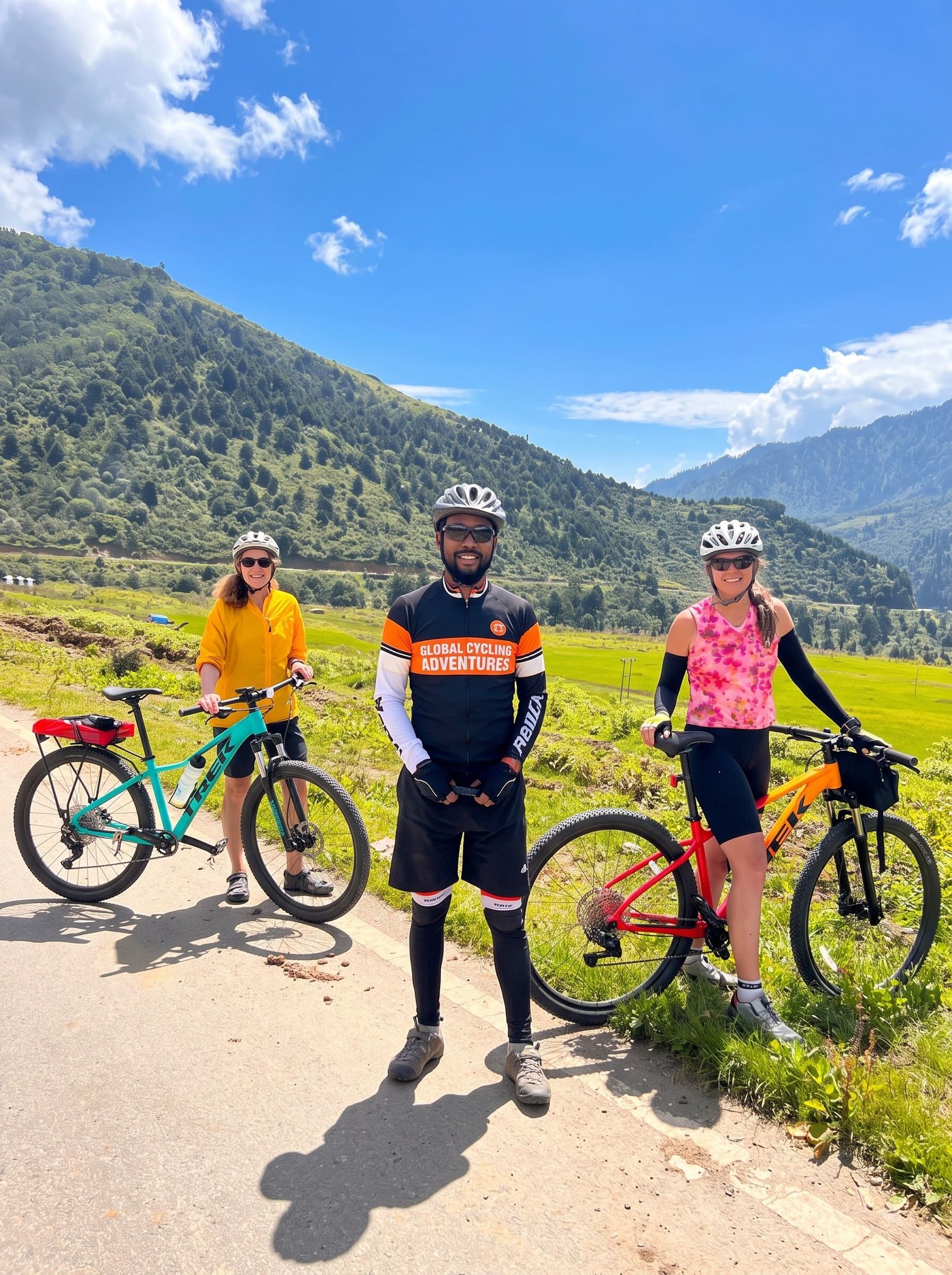
Visiting Bhutan for the first time is less like booking a vacation and more like being handed a well-run week by people who have done this thousands of times. The country's entry system — a licensed operator, a guided itinerary, a nightly Sustainable Development Fee — gets described as restrictive, but on the ground it plays out as the opposite of effort: someone else files the paperwork, someone else reads the map, and your attention goes to the places themselves. That said, first-timers arrive with fair questions. What do the rules actually demand of you, day to day? Which etiquette rules matter, and which are folklore? What surprises wait on the other side of the flight to Paro? This page answers all three in order, then lines up three first-visit itineraries, the month-by-month crowd feel, and the document folder worth assembling before departure.
The Rules, Translated Into Your Days
Every headline about Bhutan's tourism policy compresses into four practical facts once you land. None of them requires paperwork in your hands on any given day; the guide carries the permissions, and you carry curiosity. Here is what each rule actually does for you.
The operator plans, so you do not
Every international trip runs through a licensed Bhutanese operator, which means no research rabbit holes, no rental cars, no nightly restaurant debates. Your job becomes choosing between good options rather than assembling a trip from zero — a genuinely better use of a limited week.
The guide accompanies, so doors open
A licensed guide travels with you from arrival to departure. Beyond translation and history, the guide is the reason a farmhouse lunch, a festival courtyard or a monastery interior simply happens instead of staying behind a locked gate.
The nightly fee funds, so entry stays simple
The government-set Sustainable Development Fee applies to each night for non-regional visitors, and it channels tourism revenue into public services. Practically, it means no queue of separate attraction tickets — the big sites are already woven into your itinerary.
The route permit appears, when the map widens
Thimphu and Paro need nothing extra; travel beyond them requires a route permit, filed by your operator before you go. You will rarely see the document — the guide presents it at checkpoints, and the drive simply continues.
None of this lands on you daily. The machinery stays invisible by design: the only entry documents you personally handle at Paro are your passport and visa clearance, and everything else rides in the guide's folder. That is why arrival feels strangely calm — someone is holding a sign with your name on it before you have fully cleared the door, and the trip starts at conversational speed.
Etiquette That Actually Matters
Bhutanese social rules are gentler than the guidebooks imply, but a handful are load-bearing. Learn these six and you will move through temples, dzongs and village kitchens without a single awkward beat. Your guide will prompt you in the moment anyway — but it is nicer to already know.
- Dress modestly at dzongsShoulders and knees covered, hats off inside the courtyard. A light layer tucked in your daypack solves it without turning the visit into a costume exercise.
- Walk clockwise around chortens and mani wallsCircumambulation always runs clockwise, keeping the sacred side on your right. Follow the flow of local pilgrims and the motion becomes automatic by day two.
- Ask before photographing people up closePortraits are usually welcomed with a laugh, but faces deserve a request first. Your guide will ask in Dzongkha for you, and the answer is almost always yes.
- Keep voices low inside templesTemples are working places of worship, not museums. Whispered conversation is fine; so is simply standing still, which locals read as respect rather than awkwardness.
- Hand things over with both handsMoney, tea, a scarf, an orange — offering and receiving with both hands signals consideration, and shopkeepers and monks register it instantly.
- Follow your guide's lead on shoes and hatsSome chapels ask for shoes off; a few request hats off outdoors. Nobody expects you to memorize which — glance at the guide and copy freely.
None of these carry penalties; they are simply the local grammar of respect, and locals extend enormous goodwill to visitors who make the effort. The reverse is also true — nobody ranks you on your clockwise form. Relax, watch, copy, and the etiquette handles itself faster than you would think.
Six Surprises First-Timers Report
Ask returning visitors what caught them off guard and the same six answers surface, none of them on any packing list. Consider this the honest preview.
No traffic lights, and none missed
The capital runs on a human traffic director in white gloves, and the absence of signals feels calmer than anyone expects. Streets carry more pedestrians than horns, which takes about a day to feel normal.
Streets swept and dogs napping
Tidiness is close to a civic sport in Bhutan, and the street dogs sleep through all of it with total confidence in their citizens. The combination reads as a town that is looked after, not managed.
Archery matches with singing sidelines
The national sport features teams, but the sidelines are the show: choreographed songs and good-natured taunting of the opposing archer. It is the loudest thing you will hear all week, and it is delightful.
Evenings that end early and start early
Towns go quiet by nine and stir by six, so dinner is early and mornings are luminous. Your body clock will file this under benefits within two nights, whether or not it does at home.
Chili cheese as the national dish
Ema datshi — chilies cooked in a cheese sauce over red rice — treats the chili as a vegetable, not a seasoning. It appears daily, it is genuinely delicious, and it converts most skeptics by midweek.
Guides who become friends by day three
The guided format sounds formal until you realize the same person is with you all week, translating, joking and quietly fixing things. By the third day most visitors are arguing about football with theirs.
Your First Days, Sketched Honestly
Reassurance lands better with specifics, so here is the opening stretch of a typical first visit, sketched without varnish. Notice how little is asked of you in each row.
The opening days of a first visit
What actually happens, in the order it happens
Land, meet the guide, exchange scarves, and keep the evening short — either an easy Paro walk or the winding drive toward the capital.
Shoes off, voice down, clockwise — the three rules cover ninety percent of it, and the guide narrates the rest as you go.
The monastery climb doubles as orientation: prayer flags, teahouse stops and a view that resets the scale of the whole trip.
Dochula's 108 memorial chortens mark the crossing toward Punakha; the roads are smooth, and the stops come frequently enough.
Somewhere between a farmhouse lunch and a dog napping in the sun, the schedule stops feeling like a schedule and starts feeling like a week.
Comfortable First Visits
Three first-visit itineraries below cover the usual shapes: one clean week, a slower ten-day, and an eight-day built around a festival date. Each keeps the final night in Paro ahead of the morning flight, and each runs at the gentler pace first-timers tend to prefer.
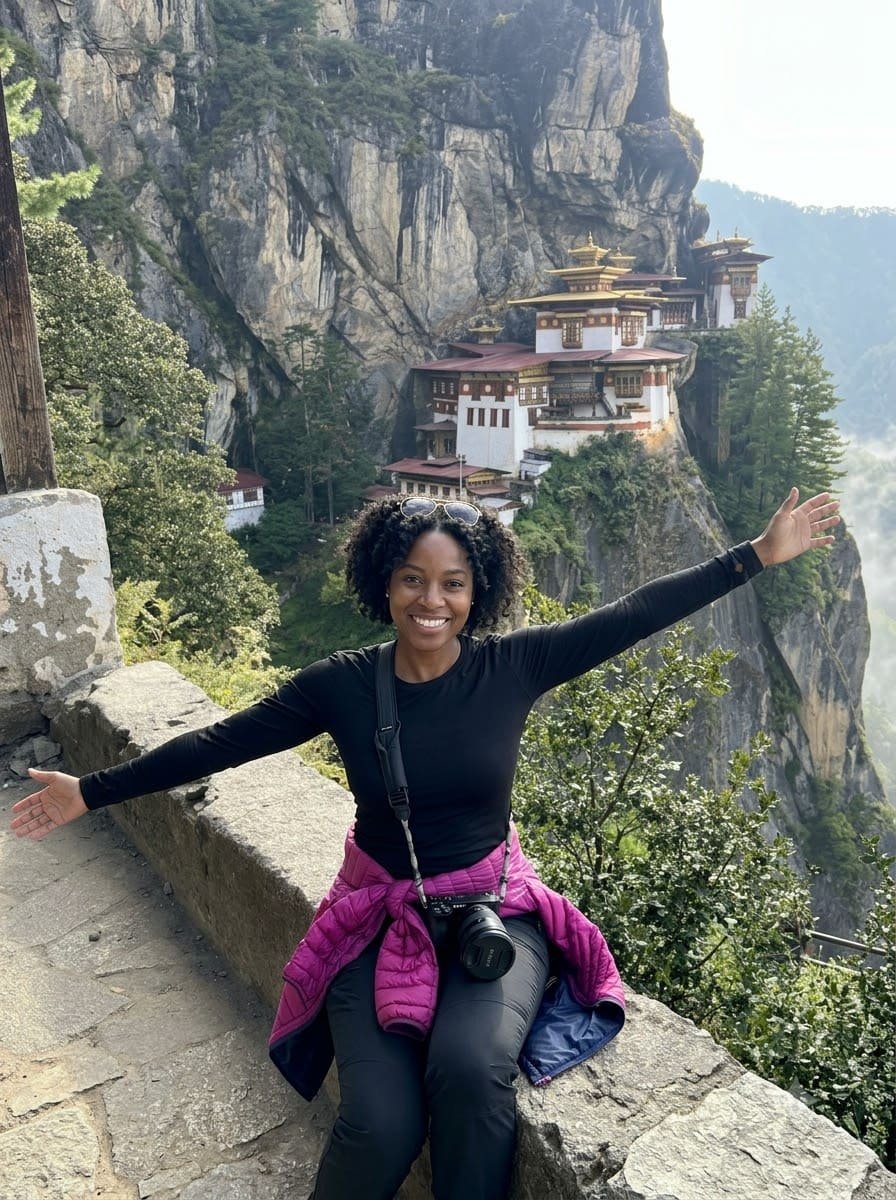
The Gentle Introduction
7 Days6 Nights / 7 Days · Paro · Thimphu · Punakha
Ideal for: first-timers who want the classics without the rush
- The classic first-timer triangle at a forgiving pace
- Tiger's Nest with the morning unhurried and free
- Dochula Pass and the Punakha Dzong in one golden day
- A farmhouse lunch that most short itineraries skip
Best for: a first week that lets the country set the pace instead of the other way round.
See the day-by-day plan

The First-Visit Slow
10 Days9 Nights / 10 Days · Paro · Thimphu · Punakha · Phobjikha
Ideal for: slow adapters and fans of two-night stops
- Two nights in three of the four valleys
- A full unbooked day in the capital
- Phobjikha's glacial valley and its monastery morning
- Silence treated as a feature, not a gap
Best for: travelers who want silence as a feature of the trip — the week that recalibrates.
See the day-by-day plan
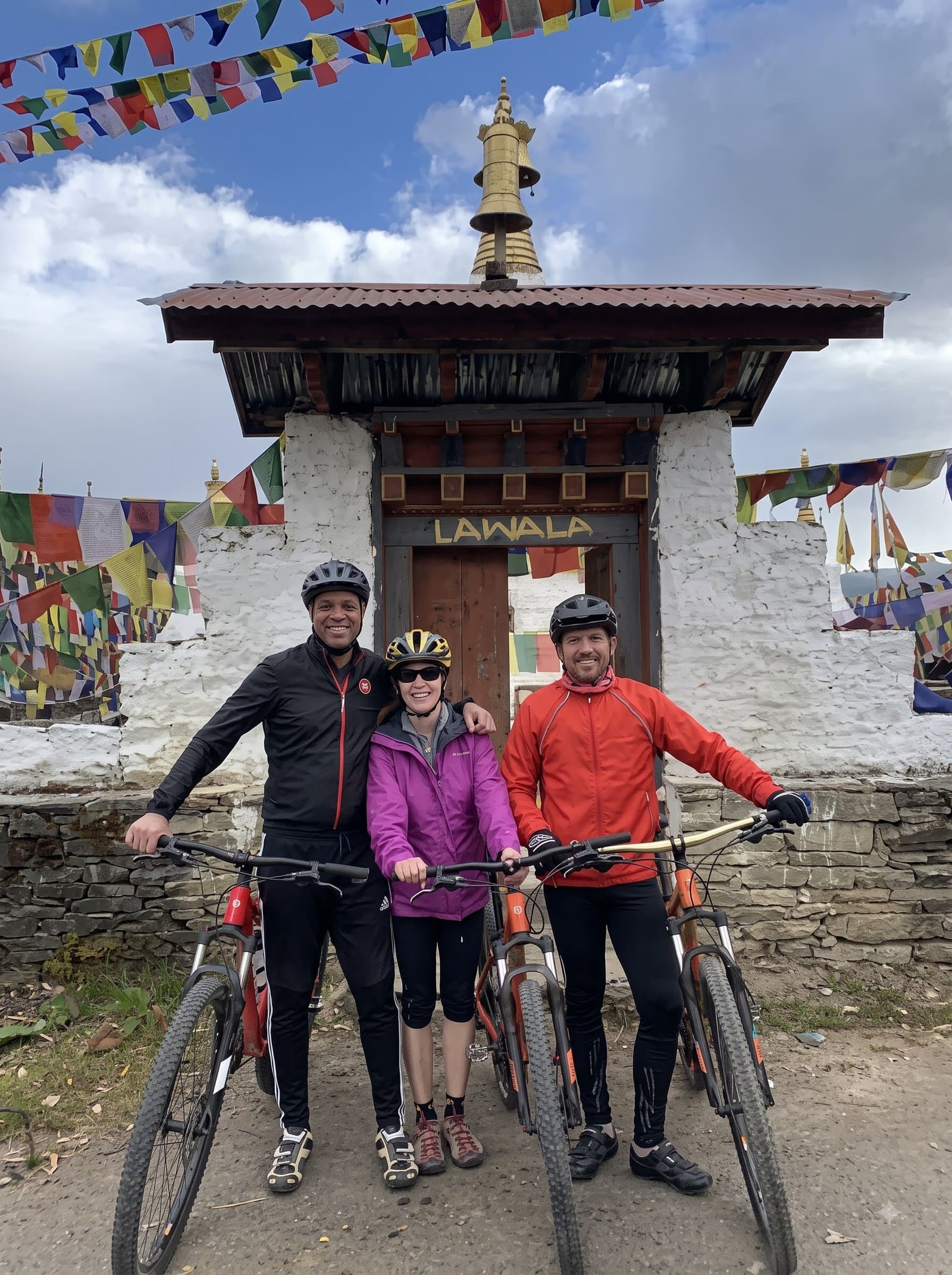
The First-Visit Festival
8 Days7 Nights / 8 Days · Paro · Thimphu · Punakha · timed to a Tshechu
Ideal for: color-first travelers anchored to a Tshechu
- A full festival day in the courtyard, guide beside you
- Tiger's Nest before the festival buzz begins
- Punakha's river valley as the decompression chamber
- Festival dates anchored first, itinerary built second
Best for: culture shock of the best kind, timed to the drumbeat of a Tshechu courtyard.
See the day-by-day plan
Festival departures move with the lunar calendar, so the eight-day shape flexes around the announced dates. Share your travel window, party size and departure city, and a designer will draft the matching itinerary in writing, with the current government-set figures confirmed the same way.
The Feel of Visiting Bhutan, Month by Month
Weather shapes the views; crowds shape the mood. The bars below combine both into the two questions first-timers actually ask: when does the country look its best, and when does it feel full. The clarity curve peaks twice, and the crowd wave follows right along.
Crowd feel & booking pressure, by month
Higher bar = clearer skies — and more competition for the same rooms
Both peaks absorb visitors gracefully — Bhutan never feels mobbed the way a European plaza can — but the texture changes. Spring brings blossom and warming trails; autumn brings festivals and the year's sharpest light. Winter belongs to Phobjikha's black-necked cranes, and the monsoon, honestly, belongs to people who like rain on a tin roof and museums to themselves.

What a First-Trip Booking Covers
A first-visit package bundles nearly everything, which is why the daily experience feels frictionless. The list below is the standard shape of a booking — ask your operator to confirm any line in writing before you commit.
Inclusions
- All valley hotels, from Paro to Punakha, booked and confirmed ahead of arrival
- A licensed English-speaking guide for every day of the itinerary
- A private vehicle and driver for the whole route
- Visa processing and the route permit for travel beyond Thimphu and Paro
- The government-set Sustainable Development Fee for each night of the stay
- All meals, from hotel buffets to farmhouse lunches
- Arrival and departure transfers at Paro airport
- Entry to the museums, dzongs and festival seats named in the itinerary
- Bottled water in the vehicle and snacks on the longer drives
Exclusions
- Long-haul flights to the gateway hubs and the Paro leg itself
- Travel insurance, including any medical evacuation coverage
- Drinks beyond the table, including alcohol
- Personal shopping, from textiles to stamps
- Tips for the guide and driver, left to your discretion
- Hotel nights forced by weather-delayed flights into or out of Paro
Documents for a First Visit
The folder is small. Bhutan's paperwork runs through your operator, so what you personally carry fits in a single wallet — with one insurance line worth reading twice before you fly.
- Valid passport: with at least six months of validity beyond your planned return date.
- Visa clearance letter: your operator processes the eVisa and sends the letter; carry a printed copy and a phone backup.
- SDF and visa fee receipt: paid through the operator in advance; keep it beside the clearance letter.
- Return ticket and itinerary: the guide holds a copy, but immigration at Paro may ask to see yours.
- Insurance confirmation: not a legal entry requirement, but a policy naming medical evacuation is the smart traveler's baseline.
- Prescriptions and a doctor's note: for regular medication, in original packaging with the prescription handy.
Insurance deserves one honest paragraph. Bhutan is safe by any regional measure, but mountain roads and a remote international airport make evacuation coverage the unglamorous essential. Standard policies often exclude helicopter rescue; read the exclusions page rather than the sales summary, and store the insurer's emergency number where it works without signal.
First-time visitors expect rules; they find rhythm — a country that moves at the speed of its own mornings.
First-Visit Tips from the Field
Six small habits that separate a good first visit from a great one, gathered from the predictable friction points of a first week.
Land with a loose calendar
Leave one afternoon in each valley unplanned. Bhutan rewards improvisation — a village archery match or a longer farmhouse lunch beats a fourth monument nearly every time.
Drink more water than seems necessary
Valleys sit high, drives are dry and the Tiger's Nest climb is real work. A steady water habit keeps the hike pleasant and the altitude a non-event for most visitors.
Carry small bills
Cards work in the cities, but villages, handicraft stalls and roadside tea runs on cash. Ask your guide where an ATM last appeared, and stock up accordingly.
Break in shoes before the flight
The monastery trail is a genuine mountain path, not a staircase. Comfortable, already-tested footwear turns the signature day from an ordeal into the trip's best morning.
Say yes to the farmhouse lunch
Eating in a family kitchen teaches more about the country in an hour than any museum wing. The food is fresher, the host is proud of it, and the memory outlasts the itinerary.
Keep the last evening unbooked
Paro's final night works best as a stroll and a slow dinner. Flights leave early, the airport is minutes from town, and a quiet ending suits the week you just had.
Frequently Asked Questions: Visiting Bhutan
Is visiting Bhutan difficult?
Logistically no, mentally yes — in a good way. The operator-and-guide system removes the hard parts of travel: no rental cars, no restaurant research, no hotel roulette. What the country asks of you instead is patience with a slower rhythm and an early-morning, early-evening day shape. Travelers who arrive expecting to orchestrate everything sometimes struggle; travelers who arrive ready to be hosted rarely want to leave.
Will language be a problem?
No. English is widely spoken because Bhutanese schools teach in it, and nearly everyone you interact with — guides, hotel staff, museum keepers, most shopkeepers in the towns — speaks it comfortably. Menus are translated, signage is bilingual, and your guide handles any Dzongkha you might encounter in the villages. Language barriers rank near the bottom of the adjustment list for US travelers.
What is the food like?
Hearty, local and rice-forward. Red rice anchors most meals, alongside ema datshi — the chili-and-cheese stew that qualifies as the national dish — plus seasonal vegetables, lentils, and chicken or pork in many hotels. Buffets soften the spice for uninitiated palates, and kitchens happily cook mild on request. Bring snacks you love; between-meal options in the valleys are limited.
Is it safe for solo travelers?
Yes, and solo travel is more common than the paired-up marketing suggests. The guide-and-driver structure means you are effectively never alone in any situation that matters, and crime against visitors is rare. Solo travelers pay single-supplement adjustments that are government-set like everything else, and the main daily change is dinner conversation: your guide usually becomes it.
What should women wear?
Whatever you would wear to a church reception: covered shoulders and knees for dzongs and temples, comfortable layers everywhere else. Bhutanese women often wear the kira, and visitors are welcome to try one — hotels can arrange it. Hiking gear is fine on the trail; towns skew modest. Pack a shawl or light scarf and you are covered for every context.
Can I talk about religion at temples?
Yes, respectfully. Guides are happy to explain Buddhist iconography, and monks frequently enjoy the exchange — some chapels even invite questions. The etiquette lives in the manner: low voice, clockwise movement, no feet pointed at the altar, and a check before photographing interiors, since many chapels prohibit it. Let the curiosity run; just let the guide set the channels.
Will I have internet?
In the towns, yes — hotels carry wifi of variable but improving quality, and local SIM cards are easy to arrange. In the valleys, expect gaps; Phobjikha and the mountain stretches can go quiet. Treat it as a feature: most returning visitors rank the enforced disconnection among the trip's benefits. Download offline maps before arrival and let the rest wait.
What surprises visitors most?
The quiet. First-timers brace for rules and restrictions and instead find swept streets, courteous drivers, dogs asleep in the sun and evenings that end early. The second-most-cited surprise is the food — chili cheese is a genuine staple, not a novelty. Almost nobody reports feeling restricted; almost everybody reports sleeping better than they have in months.
Ready to Start Visiting Bhutan?
Tell us your travel window, how many travelers are coming and which gateway city you would fly from. A designer drafts the first-visit itinerary in writing, confirms the current fee figures in the same message, and asks for no deposit until the plan reads right to you.