
Ask someone who's been to Bhutan what surprised them most, and it's rarely the scenery — photos already do a decent job of preparing you for that. It's usually the pace: how a country wedged between two of the most populous nations on Earth chose to stay almost entirely off the mass-tourism grid, on purpose, and has kept it that way for decades. For a U.S. traveler used to booking a flight and figuring out the rest once they land, that takes a little getting used to. This guide covers what actually matters before you go: who needs a visa, how Americans get there, when to schedule the trip around your own calendar, and what a Bhutan itinerary tends to look like once you're on the ground.
Why Bhutan Doesn't Work Like Most Trips U.S. Travelers Plan
Bhutan measures national progress against something it calls Gross National Happiness rather than GDP alone, and that policy shows up in ways a visitor actually notices: strict limits on development inside its handful of valley towns, a national dress code still worn day to day rather than for photo ops, and a tourism system built to keep visitor numbers manageable instead of maximized. The country is also one of the only carbon-negative nations on the planet — its forest cover absorbs more carbon than the country produces — and its tourism policy is written with that fact in mind.
What this means practically: Bhutan doesn't sell hostel beds or public bus tickets to foreign tourists, and there's no version of independently backpacking through the country the way you might through Vietnam or Colombia. Every non-Indian visitor's trip is arranged through a licensed Bhutanese tour operator, who books your guide, your vehicle and driver, and your accommodation before you even land. That structure is unfamiliar to a lot of American travelers at first, but once it's in place, the trip itself runs like a well-organized private tour rather than a rigid, group-bus experience.
Bhutan isn't hard to visit — it's just organized differently than almost anywhere else on a U.S. traveler's list. Once the system makes sense, it stops feeling like a hurdle and starts feeling like the reason the country still looks the way it does.
Visa, Permits, and What U.S. Citizens Actually Need
Every U.S. passport holder needs a visa to enter Bhutan — one of the clearest ways Bhutan's rules differ from its neighbors. India, Bangladesh, and the Maldives are the only nationalities exempt; everyone else, Americans included, applies for a visa before departure. It isn't something you apply for independently the way you might for an e-visa elsewhere. Your licensed Bhutanese tour operator submits the application on your behalf once your travel dates, guide, and itinerary are confirmed, and the visa itself is tied directly to that booking.
To get that process started, you'll typically need to provide:
- A U.S. passport valid for at least six months beyond your travel dates, with a blank visa page
- A recent passport-style photo for each traveler
- Your confirmed travel dates and a rough itinerary
- Basic personal and travel details for the visa application form
Bhutan also charges every international visitor a Sustainable Development Fee, billed per person, per night. It isn't something you pay separately at check-in — it's built into the permit and trip your operator arranges — and it's the mechanism that funds Bhutan's free healthcare system, free education through university, and a meaningful share of the country's reforestation and conservation programs. It's worth understanding what the fee actually funds, even without needing an exact figure to start planning, since it's a big part of why "budget Bhutan" isn't really a category the way budget Thailand or budget Peru might be.
Start the visa process early. Because your visa is tied to a confirmed guide and itinerary, it isn't something you can apply for the week before departure. If you're targeting the March–April or October–November windows, aim to lock in your operator and dates at least a few months out.
How Americans Actually Get to Bhutan
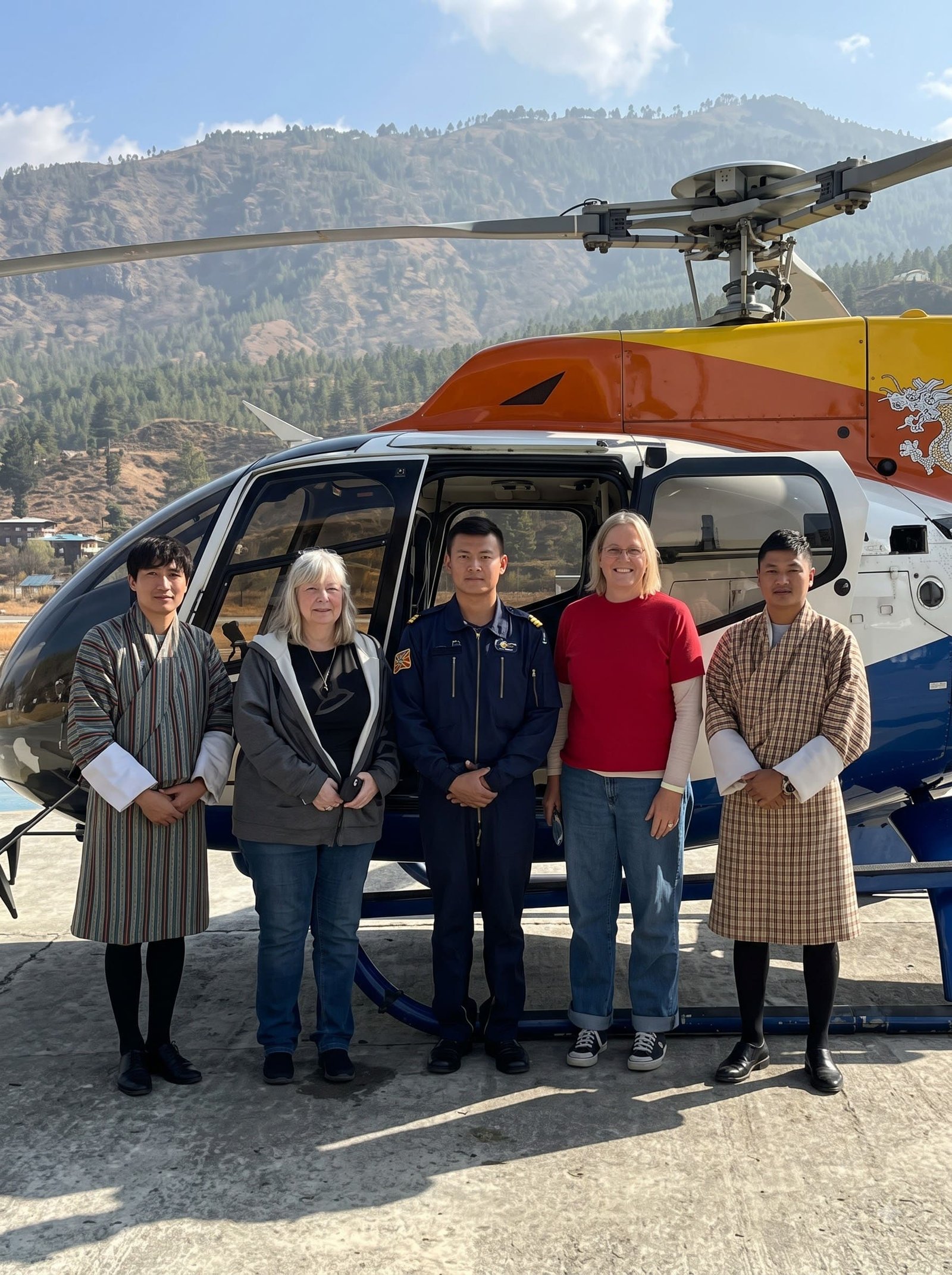
There's no direct flight from the United States to Bhutan, and there isn't likely to be one anytime soon. Paro International Airport, the country's only international airport, sits in a narrow Himalayan valley surrounded by peaks over 16,000 feet, and only a small number of pilots worldwide are certified to land there. Just two airlines fly into Paro at all — Drukair (Royal Bhutan Airlines) and Bhutan Airlines — and both operate regional routes rather than long-haul ones.
For U.S. travelers, that means every Bhutan trip involves at least one international connection before the Drukair or Bhutan Airlines leg. The most common gateway cities are Bangkok, Singapore, Delhi, and Kathmandu, with occasional seasonal routes through Kolkata and Dhaka. Depending on your U.S. departure city and which gateway you connect through, expect somewhere around 20 to 30 hours of total travel time across two or three flight segments — closer to the lower end flying from the West Coast through Southeast Asia, closer to the higher end from the East Coast.
Two practical notes that tend to catch first-time U.S. travelers off guard. First, Bhutan Standard Time runs roughly 11.5 to 14.5 hours ahead of the continental United States depending on the season and time zone, so it's worth building in a buffer day at your gateway city rather than landing in Paro and heading straight into a full sightseeing schedule. Second, the approach into Paro is genuinely spectacular — the aircraft banks between mountainsides close enough to make out prayer flags on the ridgelines — so it's worth requesting a window seat and staying awake for the descent, jet lag or not.
Best Time of Year for U.S. Travelers to Visit Bhutan
Bhutan's high season lines up almost exactly with the two windows a lot of U.S. travelers already have circled on a calendar — spring break and the run-up to the winter holidays — which is either convenient or a scheduling headache depending on how far ahead you plan. Spring (March–April) brings the Paro Tshechu festival and hillsides of blooming rhododendrons; autumn (October–November) brings the Thimphu Tshechu and the clearest mountain views of the year. Both are genuinely the best weather windows, and both are also when flights and guides book up furthest in advance.
Summer (June–August) is Bhutan's monsoon season — expect afternoon rain, mist rolling through the valleys, and a country that turns a deep, saturated green most photos don't capture. It's also considerably quieter, which some travelers actively prefer. Winter (December–February) brings cold, crystal-clear mornings and some of the sharpest Himalayan views of the year, along with a noticeably quieter Paro and Thimphu.
Weather & Travel Conditions by Month
A rough guide — mountain weather in Bhutan can shift quickly regardless of season
If your schedule has some flexibility, late May and September sit right at the edge of peak season — genuinely good weather, without needing to book six months out just to secure a guide and a Drukair seat.
How Many Days You'll Actually Want in Bhutan
Because the flight alone eats up a full day or more each way, most U.S. travelers get more out of a longer stay than the trip length alone might suggest — flying that far for a four-day trip means spending nearly as much time in transit as on the ground. A reasonable rule of thumb: budget at least a week in-country if this is a dedicated trip rather than a stopover on a longer Asia itinerary.
Trip Length, By What You Want to See
A starting point for planning, not a fixed script
Enough time for the Tiger's Nest hike and a full day in the capital. Makes more sense as an add-on to a longer trip through India or Nepal than as a standalone flight from the U.S.
The most common length for a first Bhutan trip, and the one that gives you two real nights in each of the three main towns instead of a single overnight stop.
Worth it if you've already read enough about Bhutan to know the western circuit isn't the whole country, or if you'd rather add a multi-day trek than a fourth town.
Every option above assumes a standard trip category. If a more indulgent pace with five-star and boutique lodges throughout sounds appealing, our Bhutan luxury tour guide covers what changes at the high end — the destinations barely move, but the stays, pacing, and add-ons do.
Where to Go: Bhutan's Main Destinations
Bhutan's list of towns worth building an itinerary around is short by design — the country simply hasn't developed tourism infrastructure much beyond a handful of valleys. That's less a limitation than a feature: most first-time visitors cover the same core route, and it still doesn't feel repetitive.
Paro
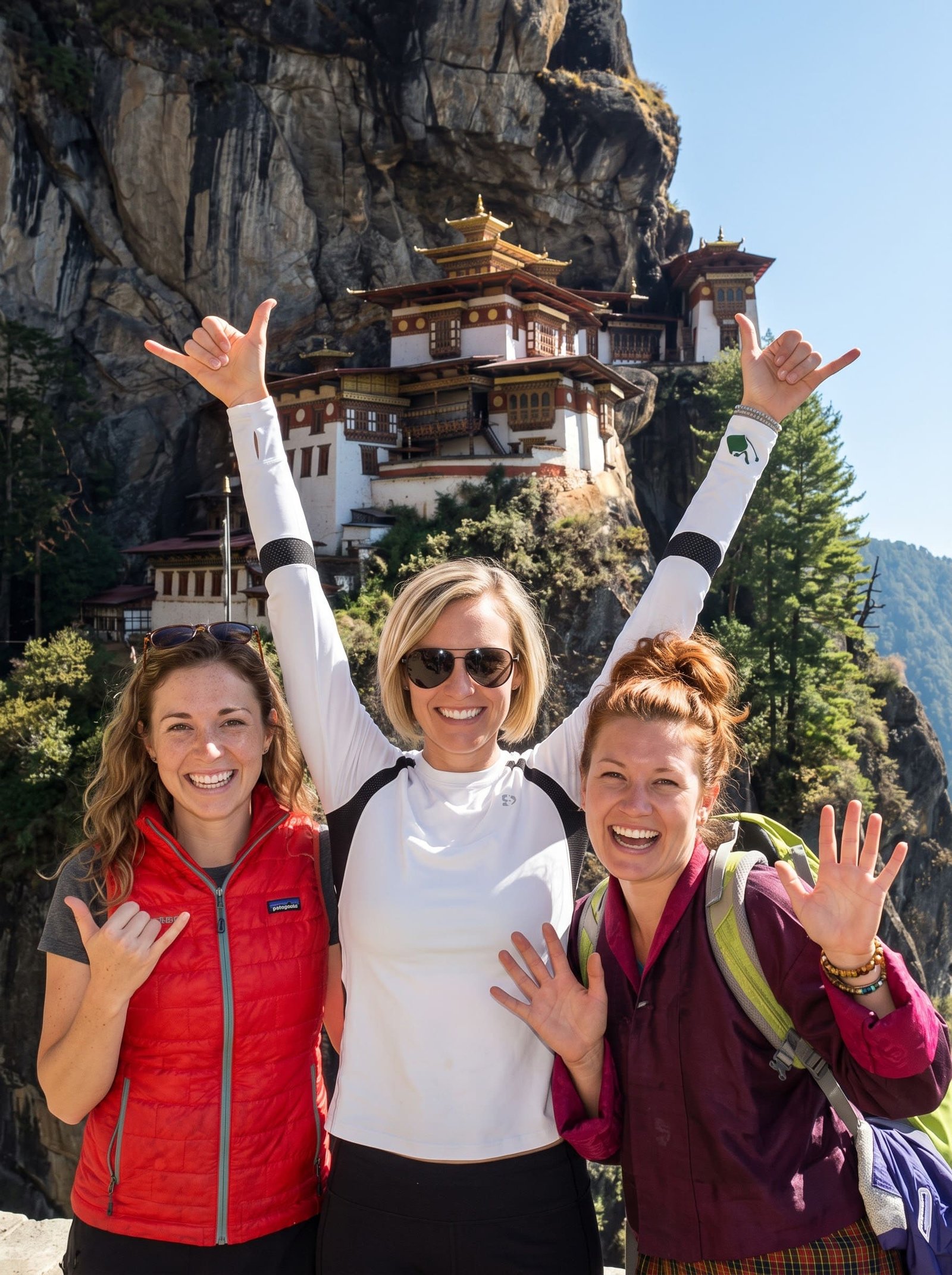
Home to Bhutan's only international airport and the Tiger's Nest Monastery, clinging to a cliff face 3,000 feet above the valley floor. Most Bhutan trips start and end here.
Thimphu
Bhutan's capital and largest town, though it's still small enough to walk most of it in an afternoon. Look for Tashichho Dzong, the Buddha Dordenma statue, and the weekend craft market.
Punakha
The former capital, reached over Dochula Pass and its 108 memorial chortens. Punakha Dzong, set at the confluence of two rivers, is one of the most photographed buildings in the country.
Phobjikha Valley
A wide, glacial valley south of Punakha known for the black-necked cranes that winter here and for a noticeably slower pace than the western towns.
Bumthang
Central Bhutan's spiritual heartland, with some of the country's oldest temples and a landscape that opens up into wider valleys than the west.
Haa Valley
One of the least-visited valleys in the country, opened to tourism only in recent years — a good add-on for travelers who've already done a western circuit and want somewhere quieter.
What There Is to Actually Do in Bhutan
Dzongs and monasteries are the sights most people picture when they think about traveling to Bhutan, but the experiences that tend to stick with U.S. travelers are usually the smaller, hands-on ones layered in around them.
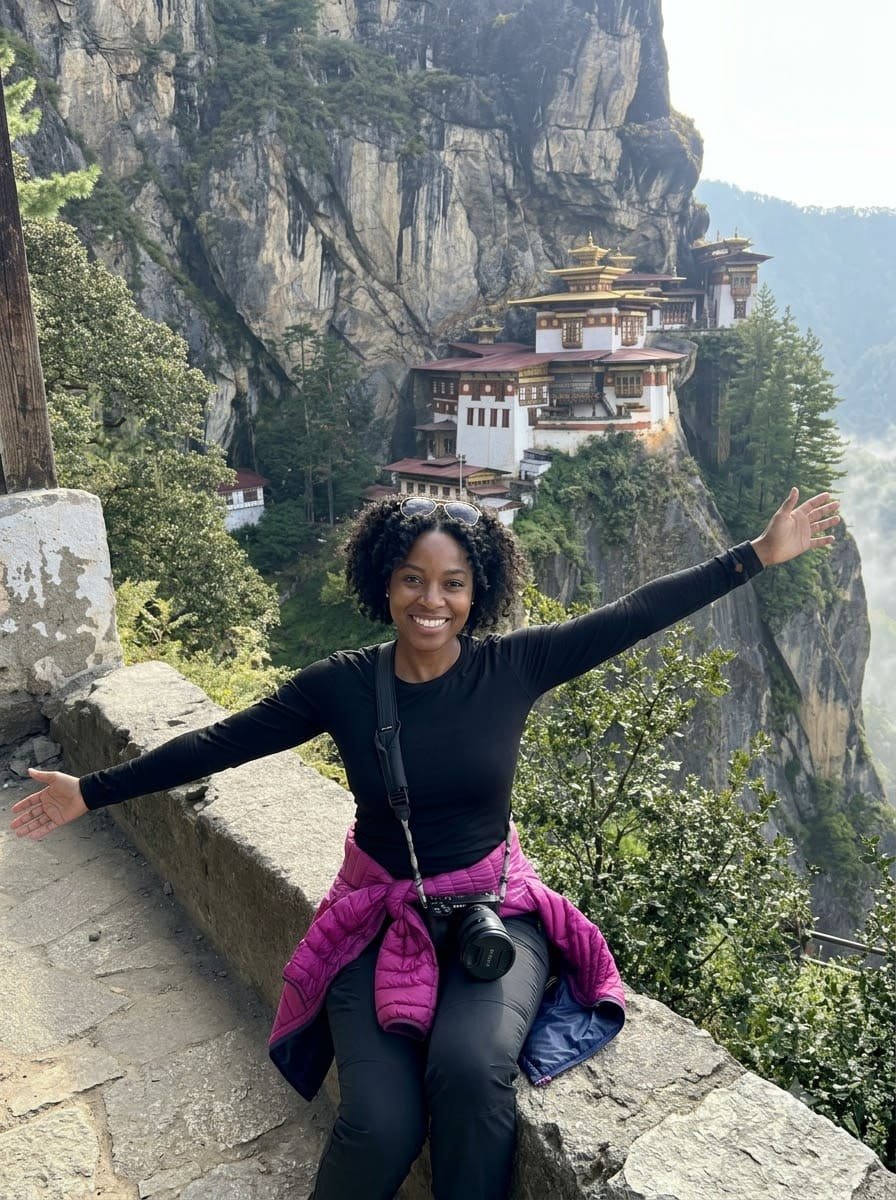
Tiger's Nest hike
The hike to Taktsang Monastery is the single most-requested activity in Bhutan — a few hours round-trip on a switchback trail, with the monastery itself perched improbably on a cliff edge.
Dzong architecture
Bhutan's dzongs function as both fortress and monastery, and each region's is distinct enough that visiting two or three on a single trip doesn't feel repetitive.
Tshechu festivals
Masked cham dances performed by monks and laypeople, held on a rotating regional calendar — worth timing a trip around if your dates allow it.
Multi-day trekking
Routes like the Druk Path connect several of Bhutan's valleys on foot, staying at basic camps rather than lodges — a different kind of Bhutan trip for travelers who want it.
Archery
Bhutan's national sport, played with modern compound bows at surprisingly long range, often accompanied by singing and dancing from the sidelines.
Hot stone bath
River stones heated over a fire and added to a wooden tub of water infused with local herbs — a traditional way to recover after a day of hiking or driving.
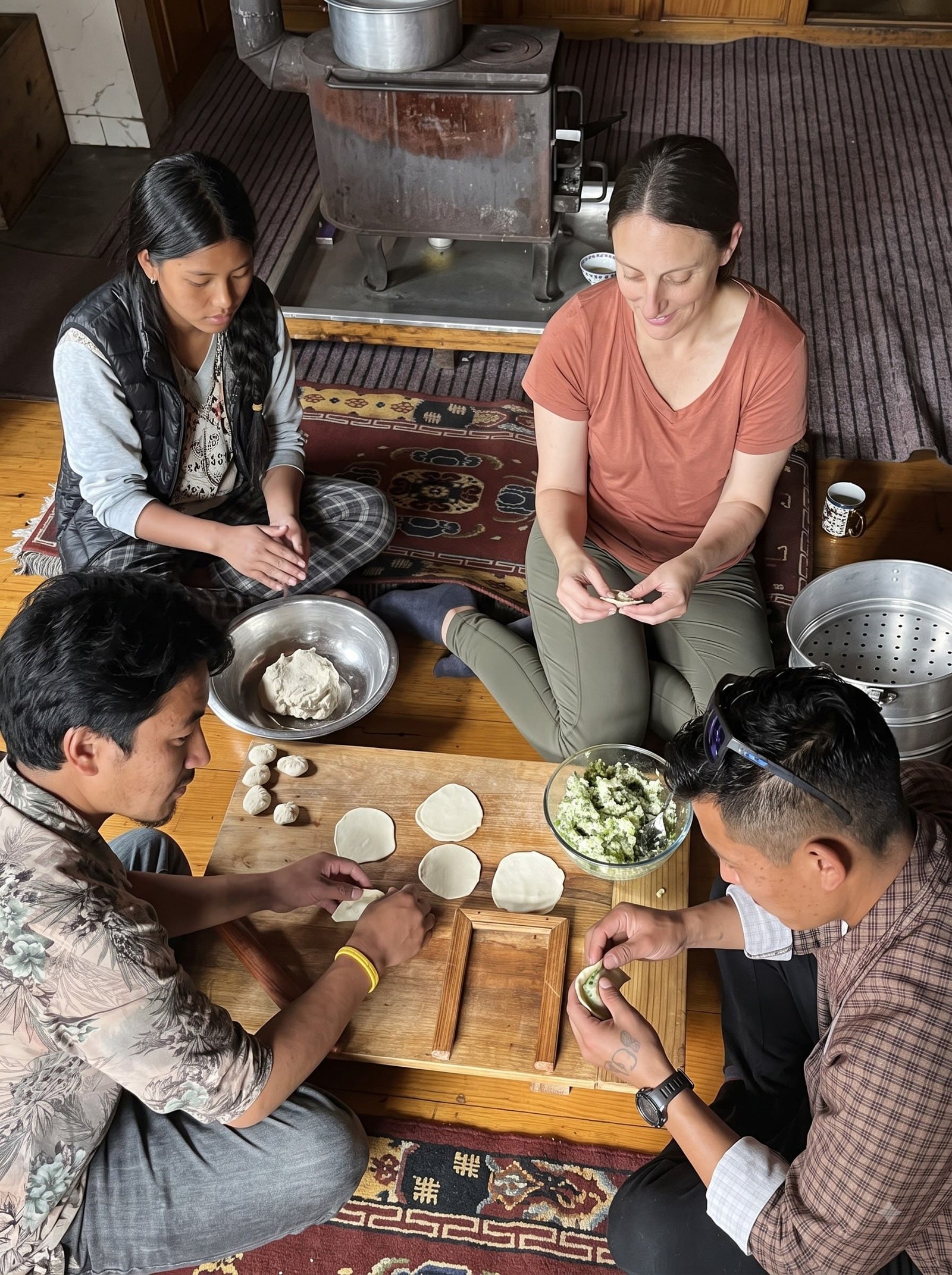
Farmhouse meals
A home-cooked meal at a local farmhouse, usually built around red rice, ema datshi (chili and cheese), and other Bhutanese staples rarely found on a hotel menu.
Textile & craft workshops
Short hands-on sessions in weaving, paper-making, or thangka painting, arranged through local workshops in Thimphu and Paro.
Bhutanese Culture and Etiquette Worth Knowing Before You Land
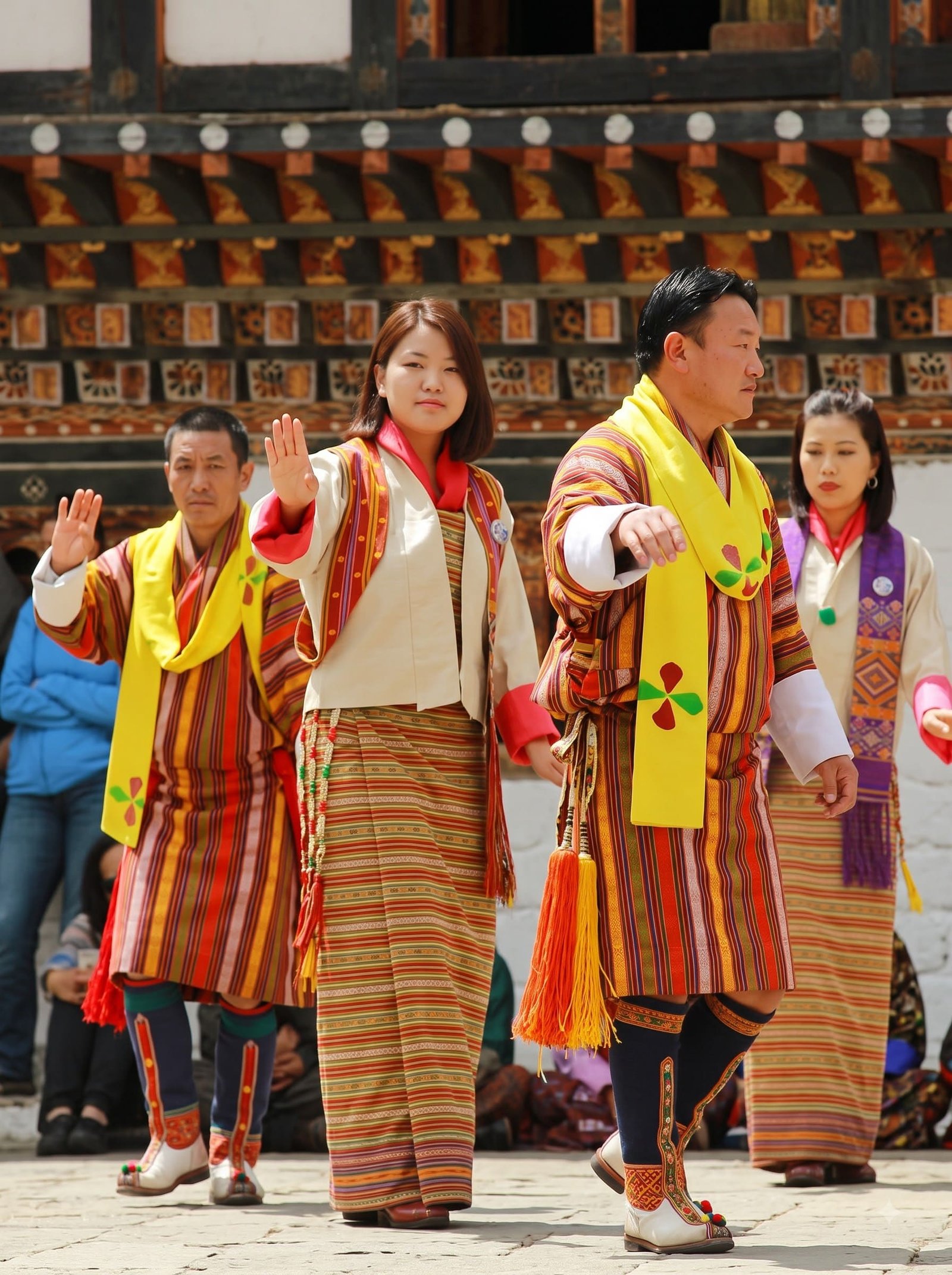
Bhutan is the only country in the world that still enforces a national dress code for its own citizens in official and public settings — men wear the gho, a knee-length robe belted at the waist, and women wear the kira, an ankle-length wrap dress, especially in government buildings, schools, and religious sites. Visitors aren't expected to dress this way, but it's worth knowing you're not walking into a country performing tradition for tourists; this is simply what an ordinary day looks like in Thimphu.
A handful of etiquette points come up often enough to mention directly:
- Dzongs and monasteries: shoes typically come off before entering temple interiors, shoulders and knees should stay covered, and photography is frequently restricted inside inner shrine rooms — your guide will tell you where the line is at each site.
- Walking clockwise: the custom around chortens, prayer wheels, and other religious structures is to walk clockwise, keeping the structure on your right.
- Tobacco: Bhutan bans the sale of tobacco products entirely; you can bring a small personal allowance for your own use but should expect to declare it at customs.
- Plastic bags: single-use plastic bags have been restricted for years, so it's worth packing a reusable bag if you plan on buying anything locally.
- Tipping: not obligatory, but customary for guides and drivers by the end of a multi-day trip — ask your operator what's typical rather than guessing.
What to Pack for a Bhutan Trip
Bhutan's elevation does more to your packing list than the season does. Paro and Thimphu sit around 7,300 and 7,700 feet respectively, and a single day can swing from sharp morning cold to warm midday sun to a chilly evening — layers matter more than any single "right" jacket.
- A warm layer (fleece or light down) plus a packable rain shell, even outside monsoon season
- Broken-in, supportive walking shoes — the Tiger's Nest hike alone is a few hours round-trip on a rocky trail
- At least one modest outfit (shoulders and knees covered) for dzong and monastery visits
- Sunscreen and sunglasses — UV exposure is noticeably stronger at altitude than it feels
- A universal power adapter; Bhutan uses Type D, F, and G plugs at 230V, which won't match most U.S. devices without one
- A basic first-aid kit with any personal prescriptions, since pharmacies thin out fast outside Thimphu and Paro
Money, SIM Cards, and Everyday Logistics
Bhutan's currency is the ngultrum, pegged one-to-one with the Indian rupee, and Indian rupees are widely accepted alongside it. U.S. dollars aren't used for everyday purchases, so plan to exchange money after you land rather than before you go — exchange counters at Paro airport and in Thimphu handle USD without much trouble. Credit cards work in larger hotels and shops in Thimphu and Paro but become unreliable outside the main towns, so carrying some local cash for markets, small purchases, and tips is worth doing.
For connectivity, most U.S. carriers don't have strong roaming agreements in Bhutan, so a local SIM or eSIM — available at Paro airport or arranged through your operator — is the more reliable option. Wifi is generally available at hotels in the main towns, though it gets patchier the further you travel from Thimphu and Paro.
Health, Safety, and Altitude — What to Plan For
Altitude is the health factor most U.S. travelers underestimate. Paro and Thimphu themselves sit at a moderate elevation, but several popular add-ons — the Chele La and Dochula mountain passes, and any multi-day trek — climb well above 10,000 feet, high enough for altitude symptoms to show up even in travelers with no prior issues at elevation. Building in an easy first day or two before a high-altitude activity, staying hydrated, and telling your guide if you feel off are the practical basics.
Bhutan doesn't require specific vaccinations for entry from the United States, but a visit to a travel clinic four to six weeks before departure is a reasonable step, since routine and hepatitis A/typhoid coverage are commonly recommended for the region. Given how remote parts of the itinerary can get and how weather-dependent flights into Paro are, travel insurance that includes medical evacuation coverage is worth having rather than treating as optional.
On personal safety, Bhutan is consistently ranked among the lower-crime countries in the region, and violent crime against travelers is rare. The more relevant safety planning is mountain-related — weather, altitude, and road conditions on the country's winding valley routes — rather than anything to do with personal security in towns.
What's Already Arranged For You vs. What You'll Handle Yourself
Because a licensed operator arranges the core of every trip by policy, it helps to know upfront what's already covered versus what you'll want to plan on your own — mainly your international flights and travel insurance.
Arranged for you by law
- A licensed private guide for the full trip
- A private vehicle and driver
- Your visa application and online entry permits
- The Sustainable Development Fee
- Accommodation booked to match your chosen trip category
- Daily meals, typically full board
Worth planning separately
- International flights to your gateway city, plus the Drukair or Bhutan Airlines segment
- Travel insurance, including medical evacuation coverage
- Personal shopping, gratuities, and drinks outside of meals
- Optional add-ons: multi-day trekking permits, hot air ballooning, or helicopter transfers
- Entry fees at a small number of individually ticketed sites
Documents Checklist Before You Fly
The paperwork side of visiting Bhutan is lighter than a lot of countries require, but it's worth starting early rather than a week before departure.
- U.S. passport: valid for at least six months beyond your travel dates, with at least one blank visa page.
- Bhutan visa: applied for online by your licensed tour operator once your dates and itinerary are confirmed — not something to apply for independently in advance.
- Passport-style photographs: a recent photo for each traveler on the booking, used for the visa application.
- Proof of onward travel: your operator will typically need your international flight details to finalize permits and airport arrangements.
- Travel insurance documentation: not required for entry, but worth carrying a copy given how remote parts of a typical itinerary get.
Frequently Asked Questions: Traveling to Bhutan
Do U.S. citizens need a visa to visit Bhutan?
Yes. Every U.S. passport holder needs a visa, arranged online by a licensed Bhutanese tour operator once travel dates and an itinerary are confirmed. It isn't something you apply for independently ahead of booking a trip.
Are there direct flights from the U.S. to Bhutan?
No. There are no direct flights from any U.S. city to Bhutan. Every trip connects through a gateway city such as Bangkok, Singapore, Delhi, or Kathmandu before a Drukair or Bhutan Airlines flight into Paro, the country's only international airport.
Can I travel around Bhutan on my own, without a guide?
Independent, guideless travel isn't part of how Bhutan's tourism system works for foreign visitors. Every non-Indian traveler's trip is arranged through a licensed operator, who provides a private guide, vehicle, and driver for the full itinerary.
What is Bhutan's Sustainable Development Fee?
It's a nightly government fee charged to every international visitor and built into your permit and trip arrangements. It funds Bhutan's free healthcare and education systems and a share of the country's conservation and reforestation programs.
When is the best time of year to visit Bhutan?
Spring (March to April) and autumn (October to November) have Bhutan's clearest weather and its two biggest Tshechu festivals, though they're also the busiest months. Late May, September, and the winter months offer quieter travel with good conditions.
How many days should I plan for a Bhutan trip from the U.S.?
Because the flight alone can take a full day or more each way, most U.S. travelers plan at least a week in-country. Four to five days works if Bhutan is an add-on to a longer Asia trip.
Is Bhutan safe to visit?
Bhutan consistently ranks among the safer countries in the region, with low rates of violent crime. The more practical considerations are altitude and mountain weather, so acclimatizing properly and carrying travel insurance with medical evacuation coverage are worth taking seriously.
Do I need any vaccinations to travel to Bhutan?
There's no vaccination requirement for entry from the United States, but routine vaccinations should be current, and a travel clinic visit ahead of the trip is a good idea to discuss altitude and additional recommended coverage.
Thinking About a Trip to Bhutan?
Tell us roughly when you're hoping to travel and how many days you can realistically build around the flights, and a travel designer will walk you through what a visa timeline, guide, and itinerary would look like for your dates — no obligation to book anything.