

Search "travel to Bhutan" and you'll find plenty of photos of a fortress-monastery clinging to a cliff and not much about how an American traveler actually gets from a U.S. airport to that cliff. Bhutan is real and reachable — it just runs on a different set of rules than a typical vacation. This guide covers what those rules mean in practice: who needs a visa, how flights actually route, when to go, what a licensed Bhutanese operator does for you, four itinerary lengths to start planning around, and the small logistics — currency, time zones, altitude — that are easy to overlook until you're standing in the Paro airport arrivals hall.
Can Americans Travel to Bhutan? Visa & Entry Basics
Short answer: yes, and it's more straightforward than the reputation suggests. Bhutan only waives its visa requirement for citizens of India, Bangladesh and the Maldives. Everyone else, including every U.S. citizen, needs a Bhutan visa for every trip. The part that surprises most first-time travelers is that you don't apply for it yourself the way you would for most countries — your licensed Bhutanese tour operator submits the online application on your behalf once your travel dates and itinerary are locked in, and approval typically comes through well ahead of departure.
Your U.S. passport needs at least six months of validity remaining beyond your planned departure date from Bhutan. Entry happens almost exclusively through Paro International Airport, the country's only international airport, on one of Bhutan's two carriers. A smaller number of travelers cross overland from India, though that route is far less common for U.S. visitors starting a trip from home.
How to Get to Bhutan from the United States
There's no way around this one: no airline flies nonstop from the U.S. to Bhutan, and no U.S. carrier serves Paro at all. Getting there means connecting through a hub city and switching to one of Bhutan's two national airlines — Drukair (Royal Bhutan Airlines) or Bhutan Airlines — for the final leg. The most common connection points are Delhi, Bangkok, Singapore and Kathmandu, with Dhaka, Kolkata and Guwahati also served on some routings. Total door-to-door travel time usually lands somewhere between 20 and 30 hours, depending on where you connect and how long your layover runs.
A few practical notes worth knowing before you book anything: Drukair and Bhutan Airlines tickets are generally issued only after your visa and itinerary are confirmed, since seat allotments are tied to operator bookings. The landing at Paro is genuinely dramatic — the airport sits in a narrow mountain valley, and only a small number of pilots worldwide are certified to fly the approach — so try to get a window seat and stay awake for it if your connection allows. And because the journey is long no matter how you slice it, a lot of American travelers build in a one-night layover in Bangkok, Singapore or Delhi to break up the trip and land in Bhutan rested rather than jet-lagged.
Best Time to Travel to Bhutan
Bhutan's seasons are pronounced, and they shape more than just the weather — festival dates, mountain visibility and how busy the trails and dzongs feel all shift with the calendar. Spring (March through May) and autumn (September through November) bring the clearest Himalayan views and line up with the country's biggest Tshechu festivals, which is exactly why they're also the busiest months to travel to Bhutan. Summer's monsoon (June through August) trades some visibility for lush, green valleys and noticeably thinner crowds, and it's a fine window if your trip is centered on temples and towns rather than long treks. Winter (December through February) is cold, especially after dark, but mornings are often crystal clear, and it's the quietest time to see Bhutan's major sights without a crowd in front of you.
Weather & travel traffic, by month
A general guide — higher bars mean clearer skies and bigger festival crowds, not necessarily a better trip for you
If your U.S. work calendar gives you flexibility, late May and September come close to peak-season weather without peak-season crowds. If your dates are fixed to April, October or November, the practical move is to lock in your visa and itinerary earlier than feels necessary — Bhutan doesn't have an unlimited number of guides and vehicles available on any given day, and popular routes fill up.
How Bhutan's Travel Policy Actually Works
Bhutan calls its approach "high value, low impact" tourism, and understanding it up front makes the rest of your planning much simpler. Every foreign visitor books through a licensed Bhutanese tour operator, who arranges your visa, entry permit, guide, driver and vehicle as a package — there's no version of independently backpacking around the country the way you might in a neighboring destination. That structure is set by government policy, not by your budget, so it applies whether your trip is simple or elaborate.
Part of what you pay covers Bhutan's Sustainable Development Fee, a nightly charge that funds the country's free healthcare and education systems along with conservation work — it's built directly into your tour package rather than collected as a separate line item once you arrive. Because so much of the experience depends on your specific dates, group size and interests, operators quote each trip individually rather than publishing a fixed price list; the way to get real numbers is to share your travel window and let a travel designer put together a written itinerary and quote.
Ways to Travel to Bhutan
"Trip to Bhutan" covers a lot of ground depending on what you're actually there for. Knowing which category fits before you start planning makes the itinerary conversation with your operator much faster.
Cultural Sightseeing Trip
The standard first-timer's route through dzongs, monasteries and valley towns, with your guide setting a pace that fits your interests rather than a fixed script.
Trekking & Hiking Trip
Built around the Tiger's Nest day hike at minimum, with options to add a multi-day trek such as the Druk Path for travelers who want real trail time.
Festival (Tshechu) Trip
Timed around a specific masked-dance festival held in a dzong courtyard — worth planning around the lunar festival calendar rather than the other way around.
Family Trip
A flexible daily pace, shorter walks, and hands-on stops like archery or mask painting that work across generations traveling together.
Photography Trip
Extra time built in at golden-hour viewpoints and around festivals, with a guide who understands why you might want to linger instead of moving on.
Wellness & Nature Trip
A slower route built around valley walks, hot stone baths and quieter stops such as Phobjikha Valley rather than a landmark checklist.
Popular Bhutan Itineraries for First-Time Travelers
Below are four starting itinerary lengths that map onto how much time most U.S. travelers actually have. Each one shows how the nights split across destinations, since two trips of the same length can look very different depending on where you're actually sleeping.
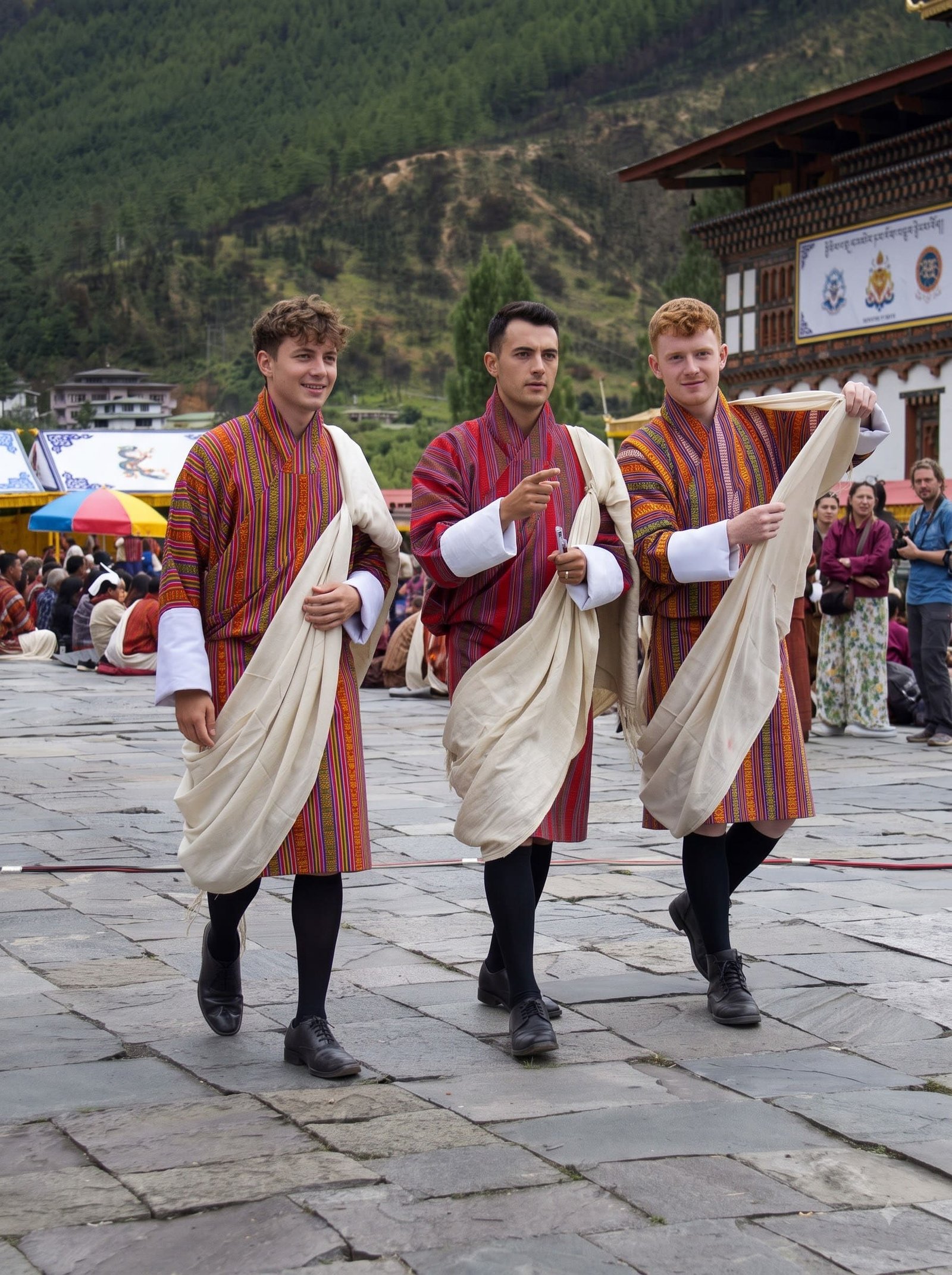
Paro & Thimphu Quick Trip
Short & Simple4 Nights / 5 Days · Paro · Thimphu
Ideal for: first-time visitors & travelers with limited time off
- The full Tiger's Nest hike, with time to actually enjoy it rather than rush it
- Bhutan's capital condensed into a single well-planned day
- Every drive under two hours, so the trip never feels like a transfer day
- A realistic option if you're combining Bhutan with a longer Asia itinerary
Best for: a first look at Bhutan when your U.S. vacation days are limited, or a stopover built into a bigger trip.
See the day-by-day plan
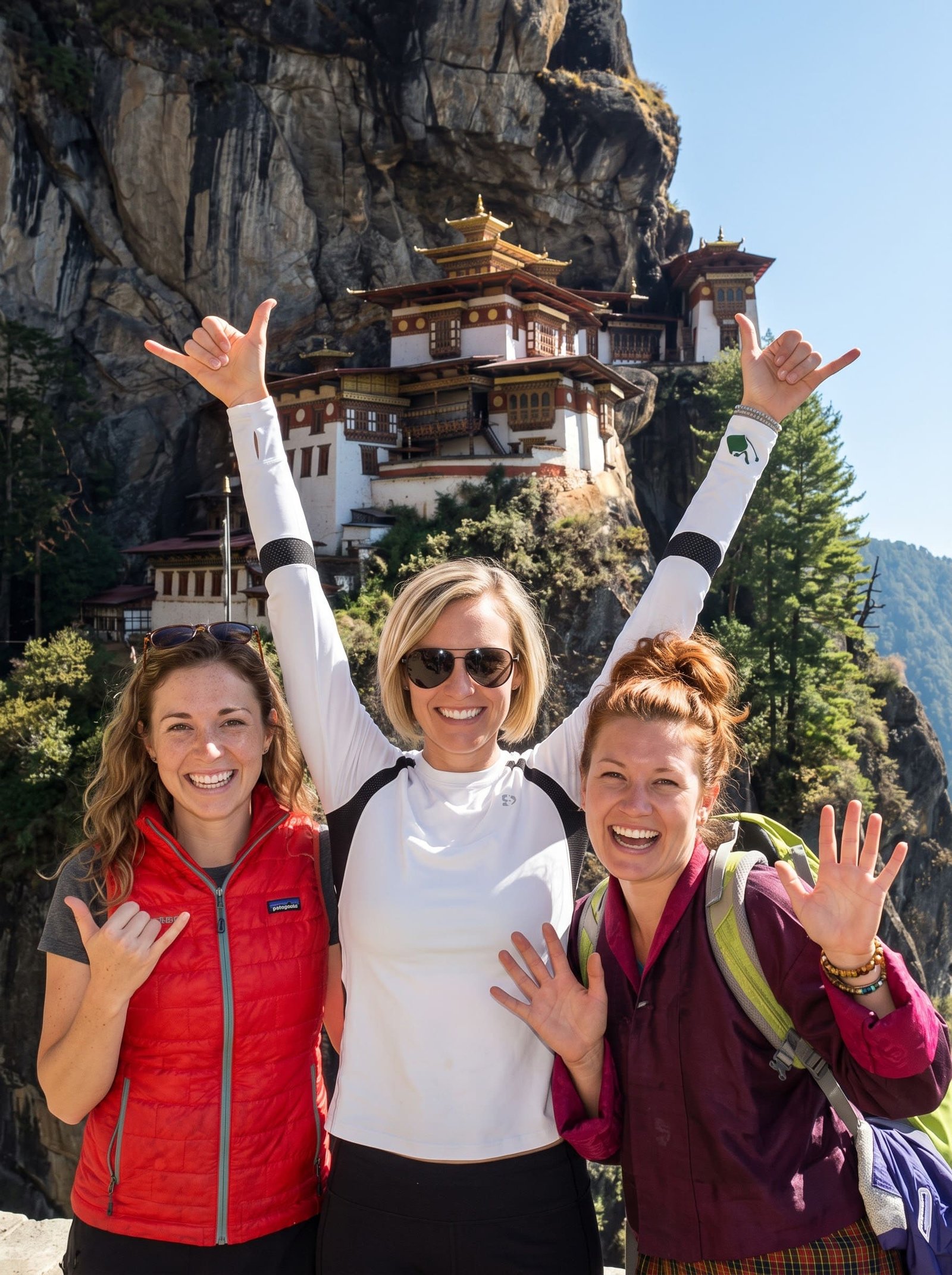
Classic Bhutan Circuit
Most Booked6 Nights / 7 Days · Paro · Thimphu · Punakha
Ideal for: most first-time travelers & honeymooners
- Two full nights in each town, so nothing feels like a drive-through stop
- Dochula Pass, with its 108 memorial chortens and (on a clear day) a wall of Himalayan peaks
- A walk across the Punakha suspension bridge, one of the longest in the country
- Time built in for a Bhutanese farmhouse lunch and a hot stone bath
Best for: the majority of U.S. travelers planning a first trip to Bhutan — this is the length most itineraries end up settling on.
See the day-by-day plan
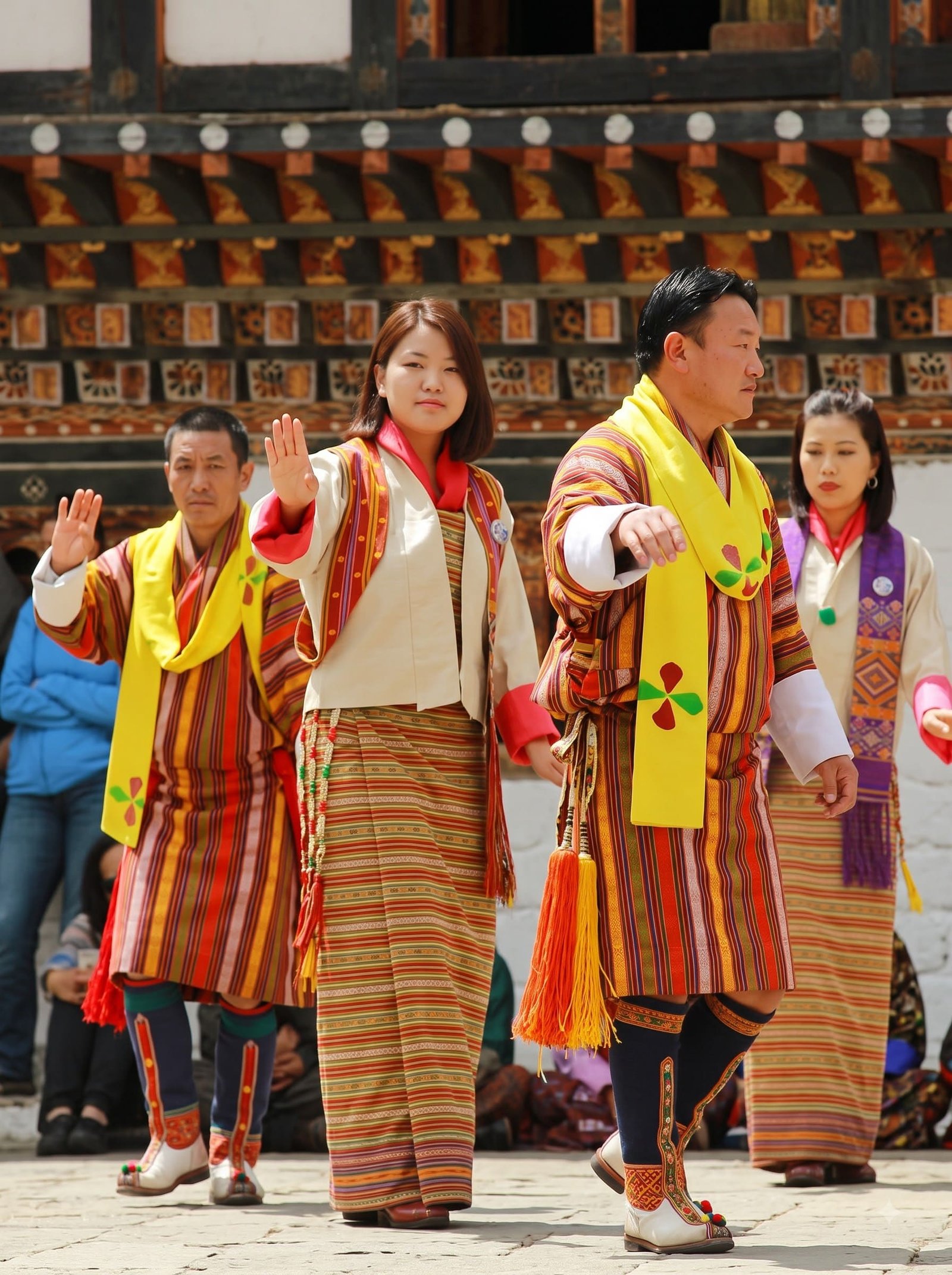
Nature & Culture Extension
Nature Focus7 Nights / 8 Days · Paro · Thimphu · Punakha · Phobjikha
Ideal for: nature lovers & photographers
- Two unhurried nights in Phobjikha Valley, past where most standard trips turn back
- Gangtey Monastery and an easy valley-floor walk, paced for photos rather than a schedule
- Seasonal black-necked crane viewing, roughly November through February
- One fewer town than a typical 8-day trip, trading a stop for more time in fewer places
Best for: travelers who'd rather spend two easy days in one exceptional valley than rush through an extra town.
See the day-by-day plan
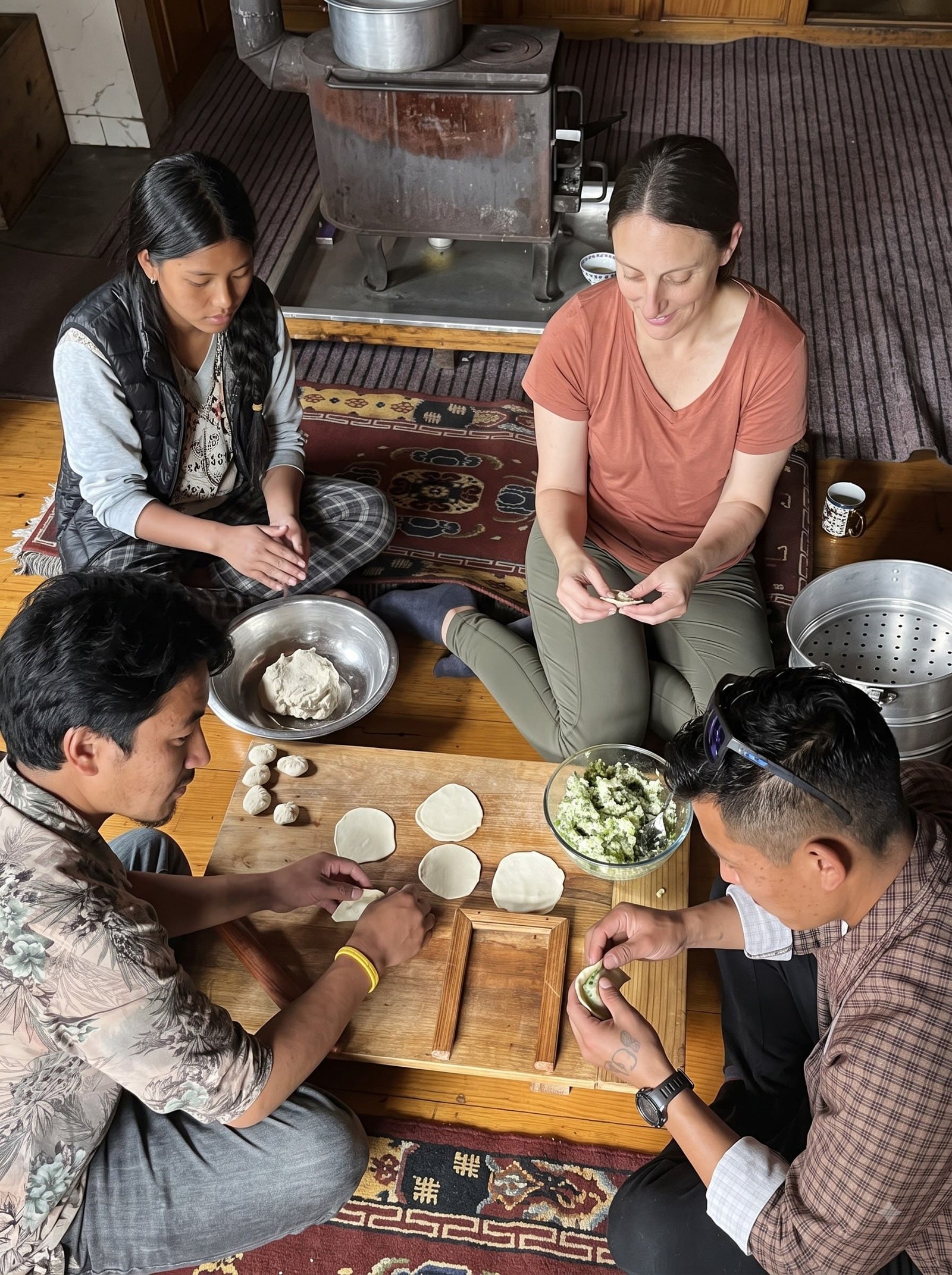
Central Bhutan Explorer
Deep Dive9 Nights / 10 Days · Paro · Thimphu · Punakha · Trongsa · Bumthang
Ideal for: repeat visitors & travelers with more time to spend
- The full central Bhutan route, which most short first-time trips never reach
- Trongsa Dzong, built directly into a cliff above the Mangde River gorge
- Jambay Lhakhang and Kurjey Lhakhang, among the oldest temples in the country
- Real breathing room — this trip is long enough that no day feels rushed
Best for: travelers who've done a shorter Bhutan trip before, or anyone who'd rather go deep than fast on a first visit.
See the day-by-day plan
Every itinerary above is a starting point, not a fixed script — add a day, swap a town, or build in extra time somewhere that matters to you. Share your travel dates and what you'd like to see, and a travel designer will confirm what's realistic with a written itinerary and quote.
Must-See Places on a Trip to Bhutan
Bhutan's list of major sights is short by design — the country deliberately keeps visitor numbers modest — which actually makes planning easier. Here's what shows up on nearly every itinerary, and why it's worth the stop.
Tiger's Nest Monastery (Taktsang)
Bhutan's signature image: a monastery built into a sheer cliff face above Paro, reached by a hike most travelers rate as the highlight of the whole trip.
Punakha Dzong
Widely considered the most beautiful fortress-monastery in the country, set where the Pho Chhu and Mo Chhu rivers meet.
Dochula Pass
A mountain pass lined with 108 memorial chortens and, on a clear day, an unbroken line of Himalayan peaks in the distance.
Thimphu & Buddha Dordenma
Bhutan's compact, low-rise capital, watched over by a giant bronze Buddha statue on a hillside above the city.
Phobjikha Valley
A wide, glacial valley without a single traffic light, known for its winter population of rare black-necked cranes.
A Tshechu Festival
Masked dances performed in dzong courtyards to mark the birth anniversary of Guru Rinpoche — worth timing a trip around if your dates allow it.
Practical Tips for U.S. Travelers
None of these are dealbreakers, but knowing them ahead of time makes the trip smoother.
- Currency: Bhutan's currency is the ngultrum, pegged one-to-one with the Indian rupee. Cards are accepted in hotels and larger shops in Thimphu and Paro, but it's worth carrying local cash for markets, small purchases and rural areas.
- Time zone: Bhutan runs on Bhutan Standard Time (GMT+6), which puts it roughly 9.5 to 13.5 hours ahead of the continental U.S. depending on your time zone and daylight saving. Plan for jet lag on both ends.
- Electricity: Bhutan mostly uses Type D, F and G plugs at 230V, so U.S. devices need a plug adapter (and a voltage converter for anything not dual-voltage).
- Connectivity: A local SIM is easy to pick up on arrival, with decent coverage in towns and patchier service in the mountains and remote valleys.
- Altitude: Paro sits around 7,300 feet and Thimphu around 7,700 feet. Most travelers adjust fine, but it's sensible to take it easy on day one and stay hydrated.
- Dress & etiquette: Modest dress is expected, especially at dzongs and temples — covered shoulders and knees, shoes off before entering sacred spaces. Your guide will walk you through the specifics as you go.
- Tipping: Not mandatory, but appreciated for guides and drivers. Your operator can advise on a reasonable amount for your group size and trip length.
On insurance. Travel insurance isn't legally required for a Bhutan trip, but it's genuinely worth arranging given the mountain terrain, limited medical facilities outside Thimphu, and the real cost of medical evacuation if something goes wrong.
Entry Requirements & Documents Checklist
Compared to many countries, the paperwork for a trip to Bhutan is light — but it's worth starting early rather than a week before you fly.
- Valid U.S. passport: at least six months of validity remaining beyond your planned departure from Bhutan.
- Bhutan visa: required for all U.S. citizens. Your tour operator applies online once your itinerary and dates are confirmed.
- Online entry permit: processed by your operator alongside the visa — no separate application needed on your end.
- Passport-size photograph: a recent digital photo is typically all that's required for the visa application.
- Travel insurance: not mandatory, but strongly recommended given the terrain and the cost of medical evacuation if it's ever needed.
You don't need to plan a trip to Bhutan the way you'd plan one anywhere else. Most of the hard logistics — the guide, the driver, the permits — are handled before you land. Your job is really just deciding how many days you have and what you want to see in them.
How to Choose a Bhutan Tour Operator from the U.S.
- Confirm they're licensed. Every legitimate Bhutanese operator holds a government tourism license — a reputable one will share this without hesitation.
- Ask who your guide will be. A guide's experience and English fluency shapes the trip more than almost any other factor — ask about their background before you book.
- Get your visa timeline in writing. Confirm when the operator will apply for your visa and how far ahead of your flight it's typically approved.
- Check what's actually included. Guide, driver, vehicle, permits and the Sustainable Development Fee should be standard — confirm what sits outside that, like international airfare and personal expenses.
- Ask about pass and weather flexibility. Mountain passes can occasionally close; a good operator plans a reasonable buffer into longer itineraries.
- Request a written itinerary and quote. A serious operator will map your actual dates to a day-by-day plan rather than a generic template.
Frequently Asked Questions: Travel to Bhutan
Do U.S. citizens need a visa to travel to Bhutan?
Yes. Unlike Indian, Bangladeshi and Maldivian nationals, U.S. citizens need a Bhutan visa for every visit. Your licensed tour operator applies for it online on your behalf once your itinerary and travel dates are confirmed, and it's normally approved well before departure.
How long does it take to fly to Bhutan from the United States?
There are no direct flights from the U.S. to Bhutan. Most American travelers connect through Delhi, Bangkok, Singapore or Kathmandu before boarding a Drukair or Bhutan Airlines flight into Paro, so total door-to-door travel time typically runs 20 to 30 hours depending on routing and layover length.
Is Bhutan safe for American travelers?
Bhutan has a very low crime rate, and every visitor travels with a private guide and driver throughout the trip, which adds a further layer of support. As with any international trip, standard precautions around valuables, mountain road conditions, and altitude still apply.
Can I travel to Bhutan without a tour operator?
No. Bhutan's tourism policy requires all international visitors, including U.S. citizens, to book through a licensed Bhutanese tour operator, who arranges the visa, entry permit, guide, driver and vehicle. Independent, operator-free travel isn't an option for foreign tourists.
What is the Sustainable Development Fee, and is it included in my trip?
The Sustainable Development Fee is a nightly charge set by the Bhutanese government that funds free healthcare, free education and environmental conservation. It's built into every licensed tour package as a standard inclusion rather than billed separately.
What's the best time of year to travel to Bhutan from the U.S.?
Spring (March to May) and autumn (September to November) bring the clearest mountain views and the country's major festivals, so they're the most popular — and busiest — windows. Summer's monsoon months are greener and quieter, and winter is cold but offers crisp skies with far fewer visitors.
What currency should I bring, and can I use U.S. dollars in Bhutan?
Bhutan's currency is the ngultrum, pegged one-to-one with the Indian rupee. U.S. dollars aren't generally used for everyday purchases, though hotels and larger shops may accept cards. It's worth carrying some local cash for markets, tips and small purchases in rural areas.
How many days do I need for a first trip to Bhutan?
Four to five days is enough to cover Paro and Thimphu at a reasonable pace. Six to seven days, adding Punakha, is the most common first-trip length. Travelers with more time often extend to eight days for Phobjikha Valley or ten days to reach central Bhutan.
Ready to Start Planning Your Trip to Bhutan?
Share your travel dates and what you'd like to see, and a travel designer will map a private itinerary to match — with a clear, written plan and no obligation to book.