
Every conversation about how to go to Bhutan eventually lands on the same surprise: the country has exactly two doors. One is an airport — Paro, threaded between ridgelines and served by two carriers — and the other is a pair of land borders on the Indian side of the map. That is the complete list. This page walks through every route in: the four air gateways and what each is actually good at, the land crossings and who they suit, then the entry paperwork in the strict order it happens. By the end, the route will have chosen itself, because the honest answer is that your trip shape picks the door, not the other way around.
Flying In: The Four Gateways
Four cities run practical scheduled service to Paro, and each has a distinct personality. Frequency differs, scenery differs, and the best choice depends on where your long-haul flight lands and what else the trip includes.
Bangkok — the workhorse
Suvarnabhumi carries the most frequent Paro schedule of any hub, which makes it the easy default when dates are fixed. Long-haul connections from the US arrive overnight and meet morning departures almost perfectly.
Delhi — the India-linked option
A daily link to Paro that pairs naturally with an India itinerary — before, after, or as the whole reason for the routing. The approach into Paro from the plains is reliably dramatic.
Kathmandu — the scenic hop
The short flight from Nepal clips the high Himalaya on a clear day, and it is the gateway to pick if Bhutan and Nepal share one trip. Window seats on the right side sell first for a reason.
Singapore — the low-frequency wildcard
Service runs only a couple of days a week, so Singapore suits flexible dates rather than fixed returns. When it aligns, it is the most comfortable long-haul entry point from the Pacific side.
Why mornings dominate at Paro. The runway sits between ridgelines, and flights land in daylight windows when the valley air is calmest — which is why schedules bunch into morning arrivals and departures. The practical consequence: plan to reach your gateway city the night before, because a same-day connection to a morning Paro flight leaves no room for the delay you do not want to imagine.
The Land Borders, Honestly Explained
Two road crossings connect Bhutan with India, and both are real options — for a specific kind of traveler. Here is what each crossing is, who thrives on it, and the honest catch that follows both.
Phuentsholing — the commercial crossing
The busy gateway town on the West Bengal border, a long drive from the region's airports. It suits travelers already moving through India, with permit processing handled across the border town's offices.
Samdrup Jongkhar — the eastern gate
The quiet crossing in the country's southeast, feeding a spectacular multi-day drive toward Trashigang and the east. Remote, rewarding, and far from every western-valley headline.
Who overland suits
Travelers already in India or Nepal on a longer regional journey, with flexible weeks rather than fixed vacation days. For them, the road in becomes part of the story rather than a compromise.
The honest catch
The drives are long, the paperwork takes longer, and flying into Paro remains simpler for nearly every international trip. Overland entry is a fine adventure — just not a shortcut.
The Entry Paperwork, In Order
Whether you fly or drive, the paperwork sequence is identical — it just ends at a different desk. Six steps, in strict order, none of them difficult as long as each one finishes before the next begins.
- Passport firstValid for at least six months beyond your return date. Every later step keys off it, so renew early if the expiry is close.
- Operator files the eVisaA licensed Bhutanese operator submits your details and itinerary through the online system. Non-regional visitors cannot file independently — the license is the mechanism.
- Clearance arrivesApproval typically lands within a couple of weeks. Keep the printout; it follows you to the arrivals hall or the border post.
- Paro ticket after clearanceThe airlines issue tickets only once clearance is in hand, so the flight booking waits — even when the fare you are watching looks tempting.
- Fees paid through your operatorThe visa fee and the nightly Sustainable Development Fee are collected by your operator and confirmed with receipts. Rates are government-set and revised periodically, so confirm current figures in writing.
- Checked at the doorAt Paro arrivals or the land border, passport, clearance and receipts get checked and stamped. Ten minutes of queue, and the country is yours.
Notice what this sequence protects you from: paying for anything before clearance exists, booking a flight that cannot yet be ticketed, and arriving with gaps in the file. Run the steps in order and the border experience is genuinely dull — which is exactly how a good entry process should feel.
Fees, stated plainly. Two government charges apply to non-regional visitors: the one-time visa fee and the nightly Sustainable Development Fee. Bhutan's government sets both and revises them periodically, so this page prints no figures — ask your operator to confirm the current rates for your dates in writing before any payment changes hands.
Choosing How to Go to Bhutan
The best gateway is less a destination decision than a routing decision. Your long-haul flight, your side trips and your date flexibility do the choosing. These five pairings cover most trips from the United States.
Which gateway fits which trip
A starting map — fares and schedules make the final call
Europe-and-Delhi or Gulf-and-Bangkok — both align overnight arrivals with morning Paro departures. Pick by fare, and by whether India belongs to the trip anyway.
Trans-Pacific itineraries feed Singapore and Bangkok cleanly. Singapore's low frequency wants flexible dates; Bangkok rewards a fixed return.
Combining both countries turns the scenic Himalaya hop into the centerpiece connection rather than an extra flight bolted on.
A daily Paro link slots into an India itinerary with almost no friction — and the land borders become theoretically interesting too.
With flexible dates, choose the gateway whose Paro schedule fits first and build the trip around it. The map is a souvenir here; the timetable is the plan.
Routes Turned Into Trips
Three itineraries, each built around one of the gateways above. The Bhutan interiors differ slightly; the real difference is where the story starts — and what the long-haul flight connects to on the way.
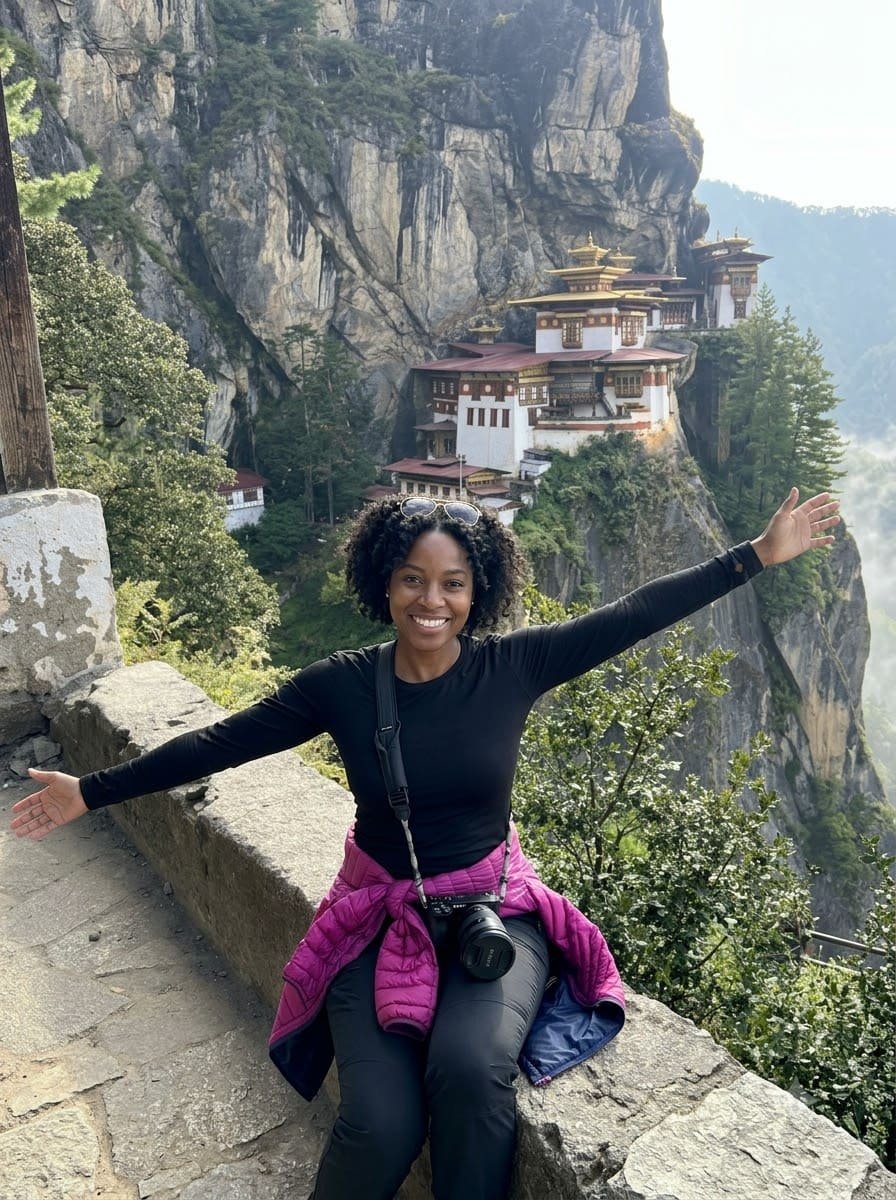
The Bangkok-Route Week
7 Days6 Nights / 7 Days · Paro-Thimphu-Punakha
Ideal for: the simplest connection — one hub, one clean routing, one week
- Built around Bangkok's wide Paro schedule — the forgiving gateway
- Overnight arrival meets the morning flight with hours to spare
- Western circuit at an honest pace, hike included
- Final Paro night matched to the morning departure
Best for: one clean routing — the least complicated way to get a great week.
See the day-by-day plan

The Kathmandu-Route Combo
9 Days8 Nights / 9 Days · Kathmandu-Paro-Thimphu-Punakha
Ideal for: two-kingdom trips where the flight is part of the point
- Two nights in Kathmandu before Bhutan begins — stupas and squares
- The scenic Himalaya hop to Paro on a clear morning
- Tiger's Nest the day after arrival, legs recovered in Nepal
- Two countries, one long-haul ticket, zero wasted layovers
Best for: the scenic hop done properly — two kingdoms sharing one vacation.
See the day-by-day plan
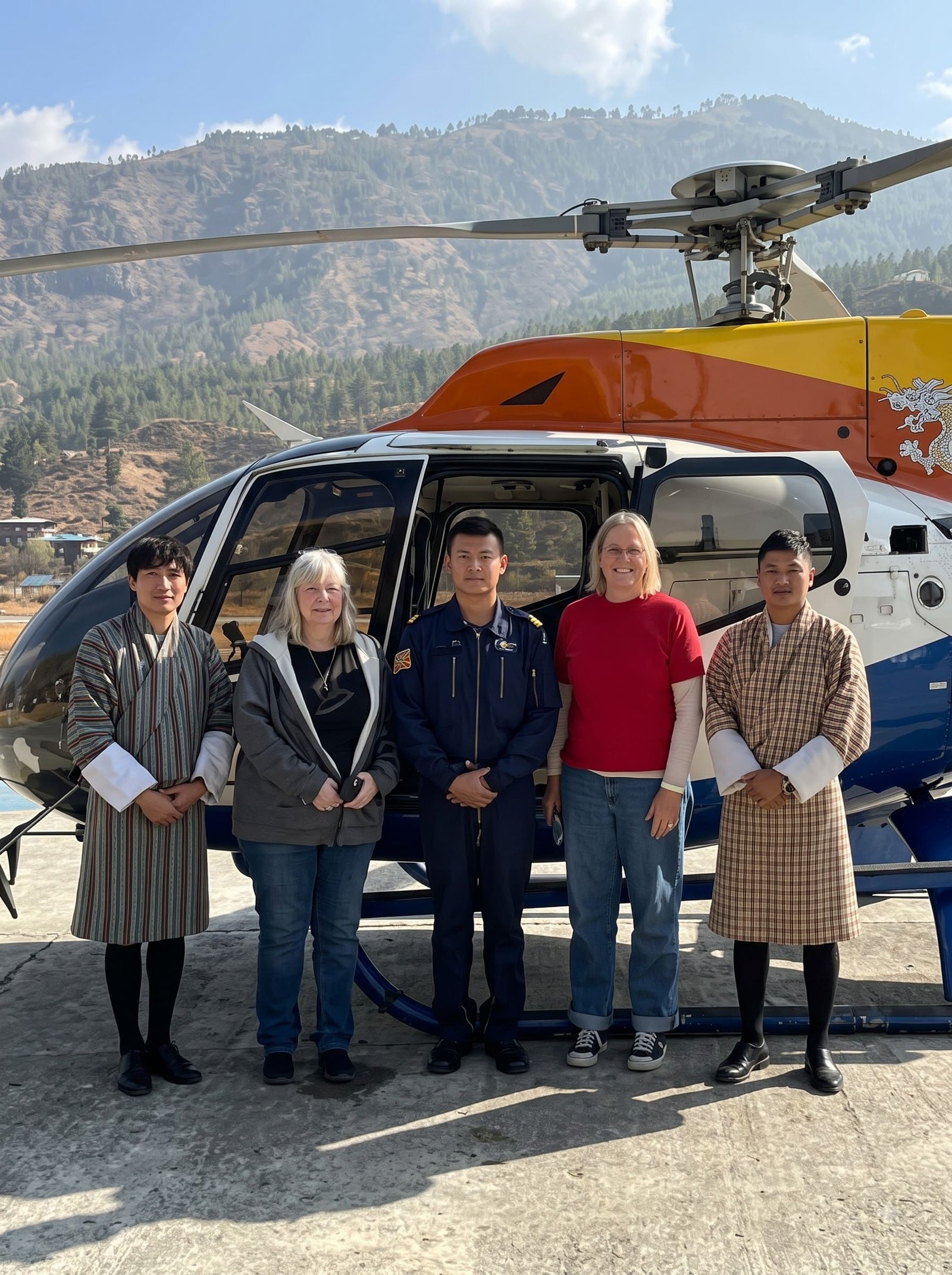
The Delhi-Route Extended
10 Days9 Nights / 10 Days · Delhi-Paro-Thimphu-Punakha-Phobjikha
Ideal for: India-plus trips with the crane valley folded in
- A night in Delhi on either side of the Bhutan week
- The daily Paro link from the Indian capital
- Phobjikha's glacial valley added to the western circuit
- Two countries in one trip without two long-haul flights
Best for: two countries, one long haul — the India-plus-Bhutan combination.
See the day-by-day plan
Each card assumes the gateway city is already part of your journey or worth a night on arrival. Tell your travel designer where the long-haul lands and they will match the Paro schedule, the drives and the hotel nights into one written plan before anything is confirmed.

How Weather Shapes the Routes
Every route in ends at the same runway or the same border post, and weather decides how smoothly either works. Clear months flatter the mountain flights and the passes; the monsoon tests everyone's patience. The year, briefly:
Weather & booking pressure, by month
Higher bar = clearer skies for the Paro approach and the mountain passes
For flight-heavy planners the message is simple: the clearest months are also the busiest, so book the Paro sector the day clearance lands. In monsoon weeks, add a buffer day on either side of the Paro flight — weather delays are rare but not fictional, and a spare afternoon converts them into an extra Bhutan evening.
What a Routed Trip Includes
Route planning changes the flights, not the baseline. Once you are inside Bhutan, every licensed-operator package carries the same core inclusions, with the routing details handled on top by your operator and travel designer.
Inclusions
- All accommodation from arrival night to the last Paro evening
- A licensed English-speaking guide for the entire route
- Private vehicle and driver across every valley and pass
- Visa clearance processing and route permit arrangements
- The nightly Sustainable Development Fee at the applicable rate
- Arrival and departure transfers at Paro
- Breakfast, lunch and dinner throughout
- Bottled water in the vehicle on all drives
- A cultural session or two, such as archery or a hot-stone bath
Exclusions
- International airfare and the regional Paro flights themselves
- Alcohol and specialty drinks
- Individual museum tickets beyond the itinerary
- Travel insurance and personal purchases
- Optional extras: trekking permits, festival seating, rafting
- Disruption costs from delayed or missed Paro connections
Documents for Either Door
Fly or drive, the document list barely changes — only the desk at the end differs. Assemble the set below while your operator files. Then the border, like the sequence, stays boring in the best way.
- Passport: six months of validity beyond your return, minimum.
- eVisa clearance: operator-filed, stamped at Paro or the land border; carry the printout.
- Fee payment confirmations: visa fee and nightly Sustainable Development Fee receipts from your operator.
- Passport photos: spares for border forms, just in case.
- Onward or return tickets: the routing paperwork that shows the plan has an exit.
- Insurance document: medical evacuation named explicitly; offline copy saved.
Health prep for long routes. The drives this page describes climb through real elevation — Dochula, Pele La — and valley nights run warm while pass crossings run cold. Pack layers you can shed in the vehicle, hydrate more than feels necessary, and keep any motion-sickness remedy in the day bag rather than the suitcase. Small physics, big comfort.
Getting to Bhutan is half the adventure — pick the route that makes the long way round feel like the point.
Route-Planning Tips
Five minutes of gateway strategy saves days of rework later. The travelers whose routes simply worked tend to share the same habits. Steal them.
Match hub to schedule, not geography
The nearest gateway is rarely the best one. Flight frequency out of Bangkok or Delhi beats a shorter first leg with a dead day attached.
Overnight in the gateway
Arrive the evening before your Paro flight. Same-day connections to morning mountain flights exist on paper and nowhere else.
Window seat, ask which side
The Himalaya line up on one side of the aircraft out of Kathmandu. Guides know which; reservation agents guess. Ask before you choose.
Treat land borders as trips, not transfers
Phuentsholing and Samdrup Jongkhar are multi-day journeys with real rewards. Budget days, not hours, before choosing the road.
Build a weather buffer at Paro
One slack day after the inbound flight and before the outbound one. Mountain schedules deserve the courtesy, and so do you.
Get the routing confirmed in writing
Gateway, Paro sector dates and clearance timing in one email. When three flights and two borders agree on paper, the trip agrees with itself.
Frequently Asked Questions: How to Go to Bhutan
Are there direct flights from the US?
No. Paro is Bhutan's only international airport, and only two carriers serve it — Drukair and Bhutan Airlines — neither from North America. Every trip from the US connects through a hub, most practically Bangkok, Delhi, Kathmandu or Singapore, before the final mountain approach.
Which airport do you fly into?
Paro International, in the country's west and about an hour's drive from Thimphu. It is the sole port of entry by air, which is why every route this page describes — whatever the hub — ends at the same dramatic valley runway.
Which gateway has the most flights?
Bangkok, generally. Its Paro schedule is the most frequent of the four hubs, which is why fixed-date travelers default there. Delhi runs a daily link, Kathmandu pairs scenery with a daily service, and Singapore flies a couple of days a week.
Can tourists enter by land?
Yes, through Phuentsholing or Samdrup Jongkhar, both on the Indian border, with the same visa clearance and fees as any other entry. The crossings suit travelers already in the region — the drives afterward are long, and flying stays simpler for most first visits.
What days do Paro flights operate?
Schedules vary by hub and season rather than by a fixed weekly pattern — Bangkok runs the widest spread, Singapore the narrowest. Your operator matches the sector to your clearance date and itinerary, which is one more reason the ticket comes late in the process.
What if weather cancels the flight?
The airline rebooks you on the next workable departure, which can mean hours rather than days — but mountain weather makes no promises. A buffer day at either end absorbs almost every scenario, and travel insurance covering weather disruption covers the rest.
Can I exit overland after flying in?
Yes — entry and exit do not have to match. Flying into Paro and driving out through Phuentsholing toward India's rail network is a known combination, and your operator arranges the permits for whichever direction the map points.
Do I need the visa before choosing a route?
No — route and visa run in parallel until the ticket stage. You can compare gateways freely, but the Paro ticket itself is issued only after clearance arrives, so treat the route as chosen and the flight as pending until that email lands.
Ready to Go to Bhutan?
Send your dates, headcount and departure city, and a travel designer will match the gateway, the Paro sector and the itinerary into one written plan — with a clear quote and no deposit needed to begin.