

Most travel advice about Bhutan starts with places; this page starts with your calendar. A week of paid time off, ten days between commitments, a festival announcement that fixed the dates for you — each of those points to a different Bhutan trips shortlist, and picking the wrong shape for your window is the most common planning mistake the country sees. Below, six ideas are laid out as concepts first: what they cover, how long they honestly take, and who they suit. Then the logistics every one of them shares, the seasons that flatter each, and — for the three most requested — complete day-by-day plans. By the end, you should be able to point at one idea, hand over your dates, and know exactly what you have asked for.
The Six Bhutan Trips at a Glance
Here is the full gallery. Notice how different the six are from each other — same country, completely different shapes of journey — and how each one assumes a specific amount of time rather than a generic length.
The First Look
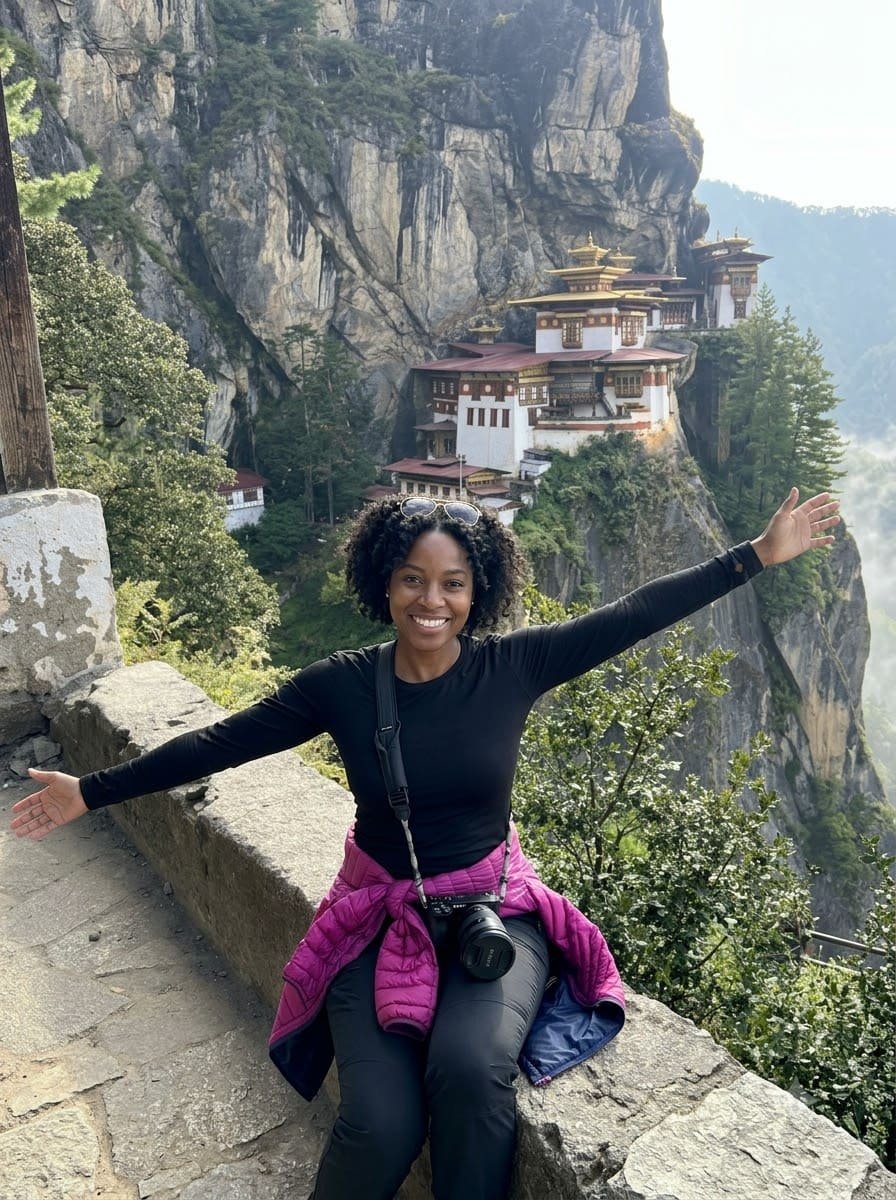
One week, western circuit: Paro for the monastery and the museum, Thimphu for the capital's energy, Punakha for the great riverside dzong. The most efficient first answer to the country, and the backbone of most Bhutan trips.
The Slow Valleys
Ten days and fewer hotels: two nights in every valley including Phobjikha, where winter brings the black-necked cranes down to the floor of the bowl. For travelers who would rather know three valleys deeply than wave at five.
The Festival Date
Eight days built around a Tshechu — the masked-dance festival that anchors whole districts to a courtyard for days. The date picks you; the itinerary arranges itself around it with quiet efficiency.
The Trek Sampler
Ten days with trail days bolted on: Tiger's Nest as the warm-up, then a taste of the Druk Path's ridgelines or the valley walks around Gangtey, with hotel beds every night.
The Nepal Combo
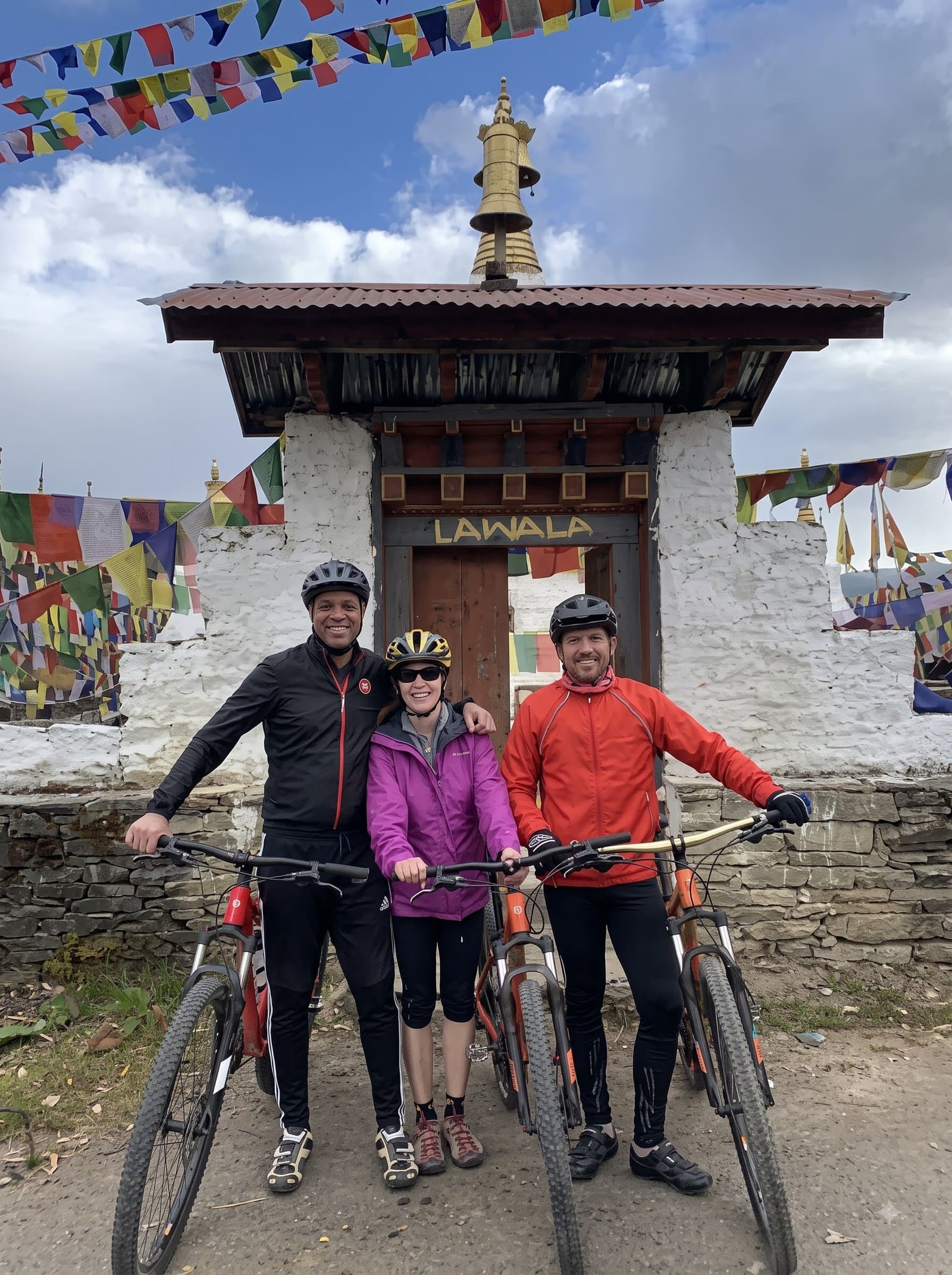
Nine days across two kingdoms: Kathmandu's stupas first, then the mountain-lined hop to Paro and the western circuit. The long flight gets broken by a real stop instead of an airport lounge.
The Long Haul
Thirteen days pushing into central Bhutan — Trongsa's dzong above its gorge, Bumthang's temple valleys — for travelers making the once-in-a-lifetime journey rather than a first look.
Every idea assumes the same flight reality. Whichever concept you pick, you connect through a hub such as Bangkok, Delhi, Kathmandu or Singapore, land at Paro, and start slow. The six ideas differ in what happens after the runway — never in how you reach it.
Matching an Idea to Your Window
Ideas are easier to choose against a calendar than against a brochure. Match your real window — the honest one, with jet lag and laundry in it — to one of the rows below, and usually one idea quietly claims the trip.
Which idea fits which traveler
Start from the time you actually have, not the time you wish you had
The week most people actually have. Cover the three western valleys and the monastery, keep one evening free, and fly home still on speaking terms with your travel companions.
Two nights per valley, Phobjikha included. The extra days do not add places so much as depth — the trip stops feeling like a schedule and starts feeling like a stay.
When a Tshechu announcement lands, the dates choose themselves. Build the trip backward from the courtyard days and let the valleys fill in around them.
Trail days bolted onto a valley trip, sized to your legs. Being honest with your operator about fitness is the only real prerequisite.
Either pair Bhutan with Kathmandu and break the long flight with a genuine stop, or commit the days to central Bhutan in one slower, deeper journey.
What Every Idea Shares
The six concepts differ in shape, but underneath them runs the same machinery — Bhutan runs one system for visitors, and it shapes every trip the same way. Six constants worth knowing before you pick.
- A licensed operator builds and filesEvery idea on this page runs through a licensed Bhutanese operator who assembles the plan and files the visa — that is how the country welcomes visitors, not a formality to route around.
- A guide rides along dailyLicensed guides come with every trip, handling access, translation, pacing, and the hundred small adjustments between expectation and reality.
- The nightly SDF appliesThe Sustainable Development Fee applies to every night for non-regional visitors, funding healthcare, education and conservation. It is government-set and revised periodically — confirm the current figure in writing.
- Route permits beyond Paro-ThimphuPunakha, Phobjikha and everywhere east need route permits your operator arranges in advance; you will never see the queue, only the checkpoint.
- Paro flights booked after clearanceThe two carriers that fly to Paro only ticket once visa clearance lands, which is why flights sit mid-countdown rather than at the start.
- A buffer day on each endWeather owns the Paro runway, so every idea assumes a slack arrival evening and a final night near the airport before the flight out.
Three Bhutan Trips, Expanded Into Plans
Three of the six ideas, written out day by day. The night splits show where the time goes, the badges show the effort level, and each plan bends — treat them as frames to argue with, not contracts to obey.
The First Look
7 Days6 Nights / 7 Days · Paro · Thimphu · Punakha
Built for: first visits on one week off
- The western circuit in one clean week
- Tiger's Nest hiked while legs and jet lag are fresh
- Dochula's 108 chortens on the way to Punakha
- A farmhouse lunch folded into the valley days
Best for: first visits on one week off — maximum country per minimum day.
See the day-by-day plan

The Slow Valleys
10 Days9 Nights / 10 Days · Paro · Thimphu · Punakha · Phobjikha
Built for: unhurried travelers
- Two nights in every valley, Phobjikha included
- Crane-country trails at a walker's pace
- Hotel changes kept rare on purpose
- Depth over checklist, with the schedule to prove it
Best for: unhurried travelers who want depth over a checklist.
See the day-by-day plan
The Nepal Combo
9 Days8 Nights / 9 Days · Kathmandu · Paro · Thimphu · Punakha
Built for: two-country trips
- Two kingdoms on one long-haul ticket
- Kathmandu's stupas before the Himalaya flight to Paro
- The western circuit complete after the hop
- A real stop instead of an airport lounge
Best for: two-country trips and long-haul flights broken by a real stop.
See the day-by-day plan
Any of the six ideas can be tuned — nights shifted, trek days added, the combo rerouted through Bangkok or Delhi instead. Send dates, headcount and departure city, and a travel designer will return a written itinerary with the government-set fee confirmed in writing.
Adding a Second Country
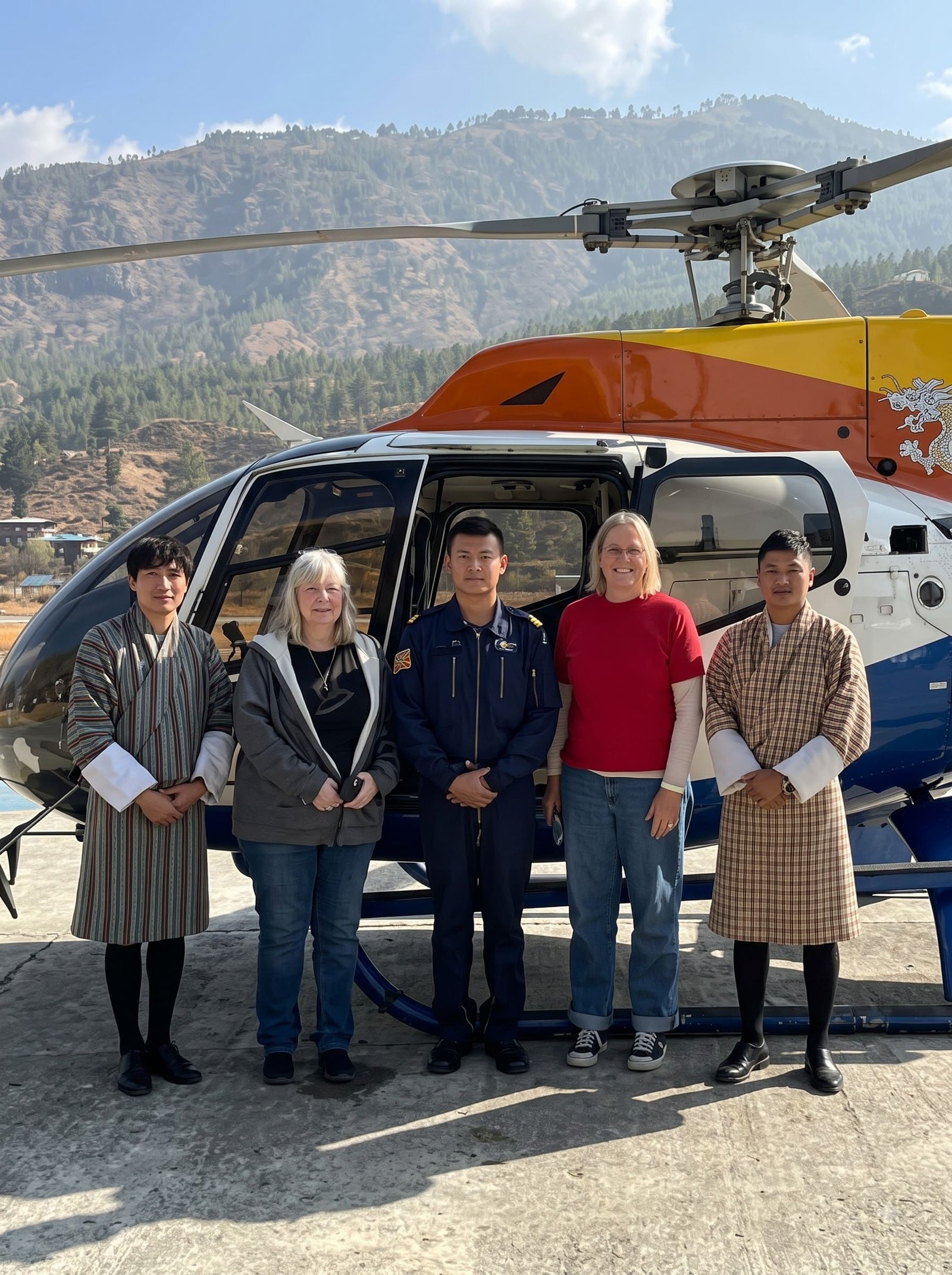
Half the appeal of a long-haul journey is everything you pass on the way, and four of Bhutan's neighbors turn a connection into a second destination. The combos below range from easy to ambitious.
Nepal via Kathmandu
The classic pairing: Kathmandu's Durbar Square and great stupas for two nights, then the short Himalaya-line flight to Paro. One region, two completely different countries, one ticket.
Thailand via Bangkok
Bangkok carries the widest Paro schedule, so a few days of street food, river temples and markets on either side of Bhutan turns a connection into a second holiday.
India via Delhi
Delhi pairs naturally when your long-haul routing already crosses it — add the Taj or simply a night in the capital on each end of the Bhutan leg, with the paperwork done properly.
Bangladesh overland
The rare one: enter or exit through Phuentsholing or Samdrup Jongkhar on a longer subcontinent journey. Possible, logistically heavier, and best discussed with operators before falling in love with it.
Two countries mean two sets of paperwork. Each country files its own visa, charges its own government-set fees, and runs its own timing rules, and the sequencing has to work in both directions. Operators coordinate this choreography regularly — hand them the whole plan early and let one written quote cover the stitching.
When Each Idea Shines
Each idea has a season where it quietly works best. The bars show sky clarity and booking pressure; the notes say which idea the month favors.
The year, mapped to trip ideas
Higher bar = clearer skies — and busier courtyards
Read the chart as a menu rather than a verdict: every idea works in every month somewhere, but each has a stretch where it pays extra dividends. If your dates are fixed, pick the idea that loves that month. If your dates are flexible, pick the idea first and let it choose its own month — that is the quieter way to travel well.
What Comes With Every Idea
Whichever idea wins, the machinery underneath it is the same, because the country runs one system for visitors. The grid below is the typical boundary; compare it against any written quote you receive.
Inclusions
- Hotel stays for every night of the idea you choose
- A licensed English-speaking guide for the whole journey
- Private vehicle and driver across all valleys
- Visa filing, clearance processing and route permits
- The nightly Sustainable Development Fee at the government-set rate
- Paro airport transfers at both ends
- Full-board meals throughout the trip
- Bottled water in the vehicle on every drive
- Entry to monuments and festivals named in the plan
Exclusions
- International flights and the regional Paro tickets themselves
- Alcoholic drinks and premium beverages
- Optional extras: treks beyond the plan, spa time, rafting
- Travel insurance with medical evacuation coverage
- Gratuities, handled personally at the end
- Costs arising from weather delays to Paro flights
Documents by Trip Idea
The core paperwork is identical for every idea; the two-country trips simply add a second stack. Lay it out before you book anything, and the countdown stays smooth all the way to the runway.
- Passport: valid well beyond your return date, and checked before any conversation with an operator gets serious.
- Visa approval: the electronic clearance your operator files for; print it for immigration and keep a digital copy in reserve.
- Fee confirmations: the government-set visa fee and nightly Sustainable Development Fee are revised periodically — carry the written confirmation of current rates.
- Second-country paperwork: for the Nepal Combo and its cousins, the other visa and its receipts, sequenced in the right order.
- Insurance summary: a printed policy naming medical evacuation, with the assistance number on the front.
- Trek notes if applicable: any additional permits for trail days, arranged by your operator and carried with the main papers.
Remote ideas, remote care. The Slow Valleys, the Trek Sampler and the Long Haul all spend nights far from serious hospitals, so the insurance question stops being theoretical. Confirm the policy explicitly covers medical evacuation from remote valleys, and carry the documents that prove it.
Pick the idea that matches the time you actually have — Bhutan rewards honesty about the calendar more than ambition about the checklist.
Tips for Choosing Among the Ideas
Say the real number of days
Tell the operator the window you actually have, jet-lag recovery included, not the one you wish you had. The right idea follows from an honest number.
Anchor, then pad
Fix the immovable piece first — a festival date, a flight deal, a family event — and let the operator pad around it. Ideas bend; anchors do not.
Go deeper, not wider
When torn between two ideas, add a night to one valley rather than a valley to the itinerary. Depth is the upgrade that never disappoints.
Let festivals pick the date
If your dates can flex at all, work backward from the festival calendar. The courtyards are worth the constraint, and the rest of the trip arranges itself.
Keep combos on one plan
Two countries booked as one written itinerary beat two separate bookings stitched together at the airport. The operator sees the seams; you should not have to.
Ask for the quiet version
Popular ideas have quiet variants: same valleys, shoulder months, smaller lodges. Ask what the low-season version of your favorite idea looks like before locking dates.
Frequently Asked Questions: Bhutan Trip Ideas
Which Bhutan trip suits a first visit?
The First Look — one week across Paro, Thimphu and Punakha — is the standard first answer, because it covers the three headline valleys and the Tiger's Nest climb without demanding more days than most people can spare. If a week is easy to take and ten days are possible, the Slow Valleys simply gives the same country more air.
What is the shortest sensible trip?
About six nights on the ground, which is what the one-week plans use. Shorter is technically possible, but every day you shave off is eaten directly by flights and transfers, and the long journey out deserves better than a two-night sprint. If time is truly tight, keep the western circuit complete and skip nothing worth regretting.
Can trips combine two countries?
Yes, and the Nepal Combo is the cleanest example: two nights in Kathmandu, then the short flight to Paro, then the western circuit. Bangkok and Delhi work the same way with stopover nights on either side of Bhutan. Two countries means two sets of paperwork and two sets of timing rules, so tell your operator the full plan before anything is booked.
Do trek add-ons need extra fitness?
The Trek Sampler assumes you can walk uphill for a few hours at altitude and enjoy it. Day hikes like Tiger's Nest are manageable for most reasonably active travelers; multi-day treks demand training and a longer trip. Be honest with your operator about fitness — they will shape trail days that challenge you without humbling you.
Are these trips family-friendly?
All of them, with pacing adjusted. Families usually do best on the First Look or Slow Valleys with two-night stops, since children suffer more from drive-day churn than from altitude or temples. Hotels in the main towns are used to younger guests, and guides are adept at turning dzong visits into treasure hunts.
What suits an anniversary?
The Slow Valleys, with two nights per valley and the hot-stone-bath evenings left unscheduled. Couples who want ceremony more than solitude sometimes aim a trip at a festival instead. Either way, tell the operator the occasion — the small upgrades and private moments tend to appear when the plan knows why it exists.
How flexible are the ideas?
Consider them load-bearing frames, not fixed scripts. Nights move between valleys, trek days bolt onto any of the longer ideas, and the Nepal Combo can swap Kathmandu for a Bangkok or Delhi stop. The only truly rigid pieces are the festival dates and the Paro flight schedule; everything else bends around them.
How do I budget without prices listed?
Ask for a written quote, and read it as named lines: the nightly Sustainable Development Fee and one-time visa fee are government-set and revised periodically, so confirm current figures in writing; the rest is the operator's package covering hotels, guide, vehicle, permits and full-board meals. Comparing two written quotes line by line tells you more than any published price ever could.
Ready to Turn an Idea Into an Itinerary?
Pick the idea that fits your window — or say which two you are torn between — and share your dates, headcount and departure city. A travel designer will develop it into a written day-by-day plan with a transparent quote, and no deposit to start the conversation.