
Type "Bhutan travel agency" into a search bar and you'll get pages of nearly identical listings — the same handful of towns, the same photogenic monastery clinging to a cliff, the same "fully customizable" promise repeated on every site. What actually separates one agency from another, for an American traveler specifically, comes down to a few unglamorous questions: does their ground operator hold a real license, how do they handle the visa paperwork, and does their sample itinerary reflect how you'll actually reach Bhutan from the U.S. — because it isn't a direct flight, and it never will be. This guide works through those questions in order, using the entry process and planning realities that apply specifically to American citizens rather than the generic international-visitor version most sites default to.
Why a Bhutan Travel Agency Isn't Optional for U.S. Citizens
Bhutan controls tourism through a "high value, low volume" policy that predates most of the marketing language built around it today. In practice, it means every foreign visitor except nationals of India, Bangladesh and the Maldives must travel on an itinerary arranged by a Bhutanese tour operator licensed by the Tourism Council of Bhutan (TCB). For an American, that operator is almost always reached through a partnering travel agency back home — one that handles the parts you'd otherwise have to figure out yourself: submitting your visa application, confirming a licensed local guide, and putting together an itinerary that actually accounts for how far Bhutan is from wherever you're starting.
This isn't a formality you can shortcut by showing up and asking around. There's no walk-in visa counter for U.S. passport holders, and unguided independent travel inside Bhutan isn't permitted for non-regional visitors. The upside, once you get past the paperwork, is that you're never actually on your own once you land — a private guide and driver are part of the arrangement from day one, not an upgrade you pay extra for.
Connect via Bangkok or Singapore
The most common routing for travelers on the West Coast, since both cities carry heavy transpacific traffic and both have onward Drukair or Bhutan Airlines service into Paro.
Connect via Delhi or Kathmandu
A shorter regional hop into Paro, often paired with a few days in India or Nepal on either end of the Bhutan leg — a natural add-on given how the flight routing already works.
Connect via Dubai or Doha
A Gulf-hub option that tends to suit East Coast departures better, joining a Paro-bound connection further along the route.
The final leg: flying into Paro
Only two carriers — Drukair (Royal Bhutan Airlines) and Bhutan Airlines — fly into Bhutan's sole international airport, and only in daylight, given the mountain terrain around the runway. Build a buffer day into your connection rather than a tight same-day layover.
Routes and schedules shift with the season. Which hub city has the most convenient Paro connection changes year to year, so this is one of the first things worth asking your travel agency to confirm against your actual departure city, rather than assuming last year's routing still holds.
How the Visa Actually Gets Arranged
American travelers sometimes assume Bhutan works like most countries — apply for a visa online, get a stamp, book flights whenever. It doesn't quite. The visa is tied to your confirmed itinerary and dates, which is exactly why the agency has to be involved before, not after, you lock in flights.
- Book through a licensed operatorYour Bhutan travel agency works with a TCB-licensed ground operator in Bhutan, who is the one actually filing your visa application through Bhutan's immigration system.
- Confirm your itinerary and datesPassport details and a finalized day-by-day plan go in together — the visa is issued against that specific itinerary, not as a general-purpose entry permit.
- Receive your visa clearance letterAn approval letter arrives before you leave the U.S. The physical visa is stamped into your passport on arrival at Paro Airport, once you present the letter alongside your passport.
- Settle the Sustainable Development FeeA nightly government fee applies to every international visitor and funds healthcare, education and conservation programs. It's typically bundled into your total package cost rather than something you pay separately at immigration.
- Carry a copy of your clearance letter while travelingAirline staff checking you in for the Paro flight may ask for it, and so may immigration on arrival — keep a digital and printed copy on hand.
- Treat your dates as fixedWanting to extend the trip once you're already there means your agency has to file an amendment — not something arranged on the spot at a hotel desk.
On the Sustainable Development Fee specifically: the rate is set by Bhutan's government and revised periodically, so we're deliberately not printing a figure here that could be stale by the time you read this. Ask your agency to confirm the current rate in writing, and make sure it's clearly itemized in your quote rather than folded into a single vague total.
Tour Styles a Good Bhutan Travel Agency Can Build
Once the visa question is settled, the more interesting part starts: what kind of trip do you actually want? Because every itinerary is custom-built rather than sold off a shelf, a capable agency should be able to shift the pace, the towns, and the activity mix around whichever of these fits you best.
Classic Cultural Tours
The standard route through Paro, Thimphu and Punakha — dzongs, monasteries, and the Tiger's Nest hike, paced for a first visit rather than a checklist sprint.
Trekking & Adventure Tours
Multi-day treks such as the Druk Path or a Jomolhari base camp route, usually layered onto a shorter cultural segment rather than standing entirely on their own.
Festival (Tshechu) Tours
Itineraries timed around a specific masked-dance festival date — worth flagging your interest early, since festival dates shift on the lunar calendar and hotel space around them books up fast.
Photography & Nature Tours
Built around rhododendron bloom season, black-necked crane migration in Phobjikha, or simply chasing the right light on a dzong courtyard at sunrise.
Family & Multigenerational Tours
A slower daily pace, shorter drives between towns, and hotel choices that work for a group spanning three generations rather than a single fast-moving couple.
Luxury & Wellness Retreats
Five-star and boutique properties, upgraded private vehicles, and add-ons like a hot-stone bath ritual or a private blessing ceremony.
How to Vet a Bhutan Travel Agency Before You Pay Anything
Because every itinerary is custom and nothing is walk-in, the agency you pick matters more in Bhutan than it might for a more conventional trip. A few questions tend to separate a genuinely capable one from a reseller just forwarding your inquiry along.
- Ask who the ground operator is. A U.S.-based agency should be able to name the licensed Bhutanese operator they work with, not just say "our local partners."
- Get the itinerary in writing before you pay a deposit. Day-by-day, with hotels named — not a vague "5-star accommodation throughout."
- Ask how guides are assigned and trained. The guide is arguably the single biggest variable in how the trip actually feels, more than the hotel category.
- Read reviews for guide quality and responsiveness, not just star ratings — a 4.8-star agency with three vague reviews tells you less than a 4.3-star one with detailed, specific feedback.
- Confirm what happens if plans change. Weather delays into Paro are common enough that it's worth knowing the agency's contingency approach before you're relying on it mid-trip.
- Get the Sustainable Development Fee and permit costs itemized, in writing, rather than absorbed into one lump figure you can't verify.
Compare Bhutan Itineraries for U.S. Travelers
The four itineraries below map roughly onto how much time Americans typically have available once the long journey to Bhutan is factored in — from a focused first look at the western valleys to a deeper route into central Bhutan for travelers who've already done the basics.

First Look at Bhutan
First-Timer6 Nights / 7 Days · Paro · Thimphu · Punakha
Ideal for: U.S. travelers on their first trip to Bhutan
- Built-in arrival buffer day, since Paro-bound connections can shift with weather
- A full, unhurried day for the Tiger's Nest hike rather than squeezing it in
- Dochula Pass and its 108 memorial chortens on the way to Punakha
- Enough time to actually adjust after the long flight in, before the sightseeing pace picks up
Best for: Americans who want a proper introduction to Bhutan without the trip becoming a second full-time job to plan.
See the day-by-day plan
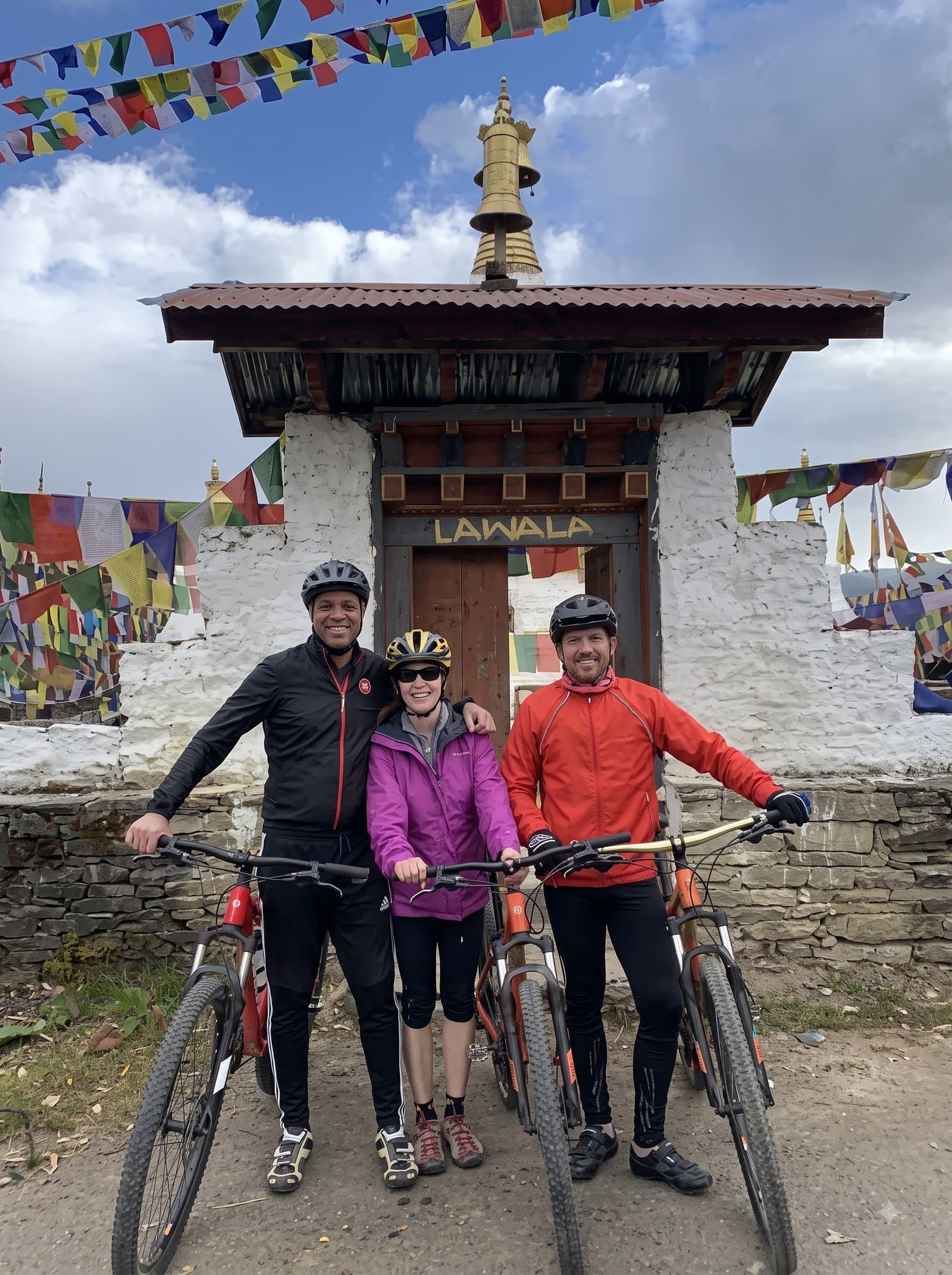
Bhutan in Depth
Nature Focus8 Nights / 9 Days · Paro · Thimphu · Punakha · Phobjikha
Ideal for: nature lovers and photographers making the long trip worth stretching out
- Two unhurried nights in Phobjikha Valley, well beyond the standard circuit
- Gangtey Monastery and an easy valley-floor nature walk
- Seasonal black-necked crane viewing, roughly November through February
- A pace built for photographers, not just checklist sightseeing
Best for: travelers who'd rather spend real time in one quiet valley than add another town just to say they saw it.
See the day-by-day plan
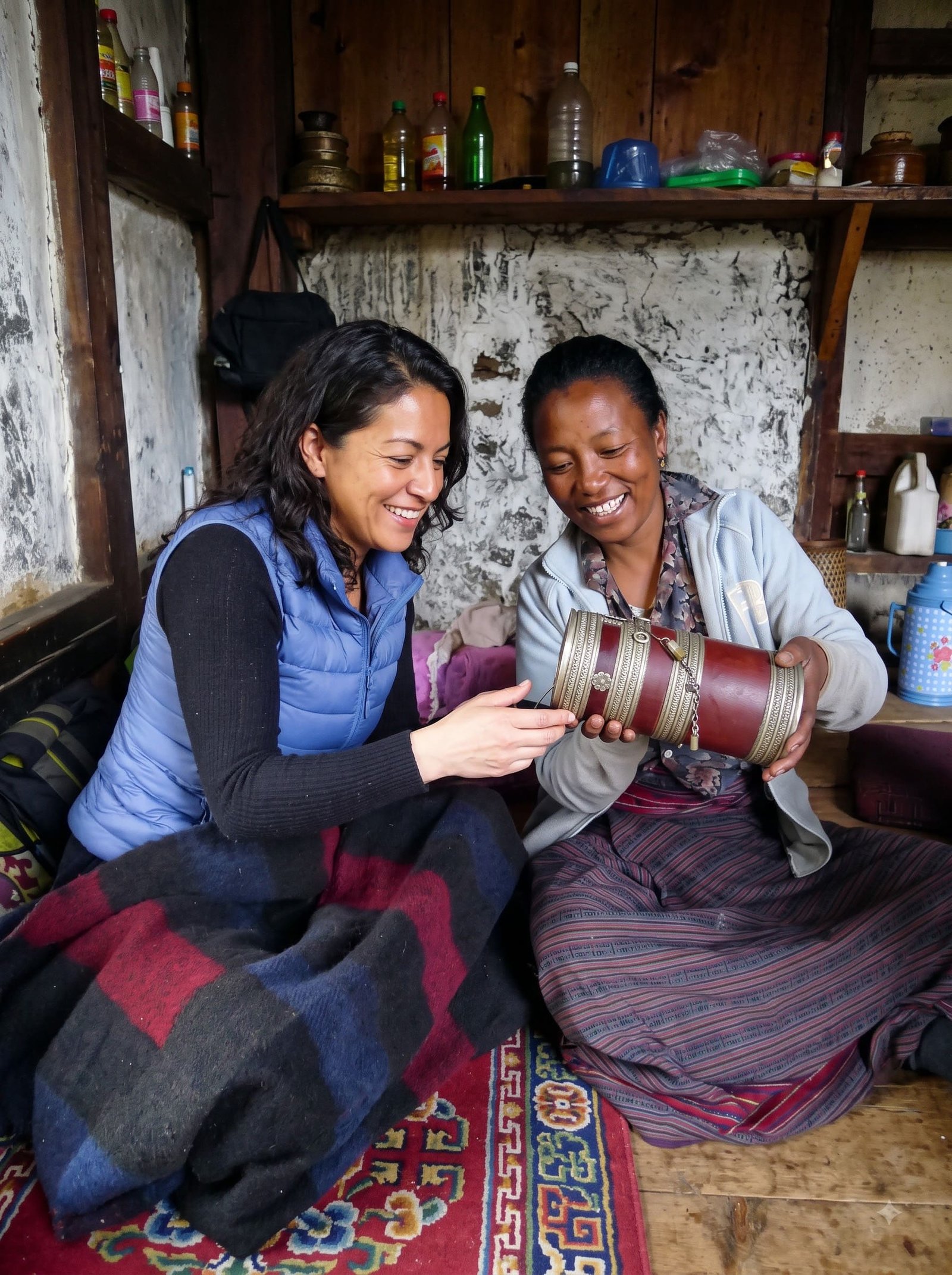
Cultural & Trekking Combo
Active9 Nights / 10 Days · Paro · Druk Path Trek · Thimphu · Punakha
Ideal for: fit, active U.S. travelers who want more than sightseeing
- The Druk Path Trek — roughly four days of high alpine lakes and ridgeline camps between Paro and Thimphu
- A cultural finish through Punakha once the trek wraps up, so the trip doesn't end on the trail
- Camping gear and support crew arranged as part of the package, not left for you to source
- A realistic acclimatization day built in before the trek starts
Best for: travelers who'd rather earn the mountain views on foot than only photograph them from a car window.
See the day-by-day plan
Grand Bhutan Journey
Deep Dive11 Nights / 12 Days · Paro · Thimphu · Punakha · Trongsa · Bumthang
Ideal for: repeat visitors and travelers who want more than the western valleys
- The full central Bhutan route, usually skipped entirely on shorter first-time itineraries
- Trongsa Dzong, perched above the Mangde River gorge
- Jambay Lhakhang and Kurjey Lhakhang, among Bhutan's oldest temples
- A slower built-in pace so one long transfer day doesn't dominate the trip
Best for: travelers who've already covered the western circuit and want genuine depth over a highlight reel.
See the day-by-day plan
Every itinerary above is a starting template, not a fixed script — a good Bhutan travel agency should be able to shift a night between towns, swap in a trek segment, or extend a valley stay. Share your travel dates, group size and departure city, and a travel designer will confirm what actually fits, with a written itinerary and quote to follow.
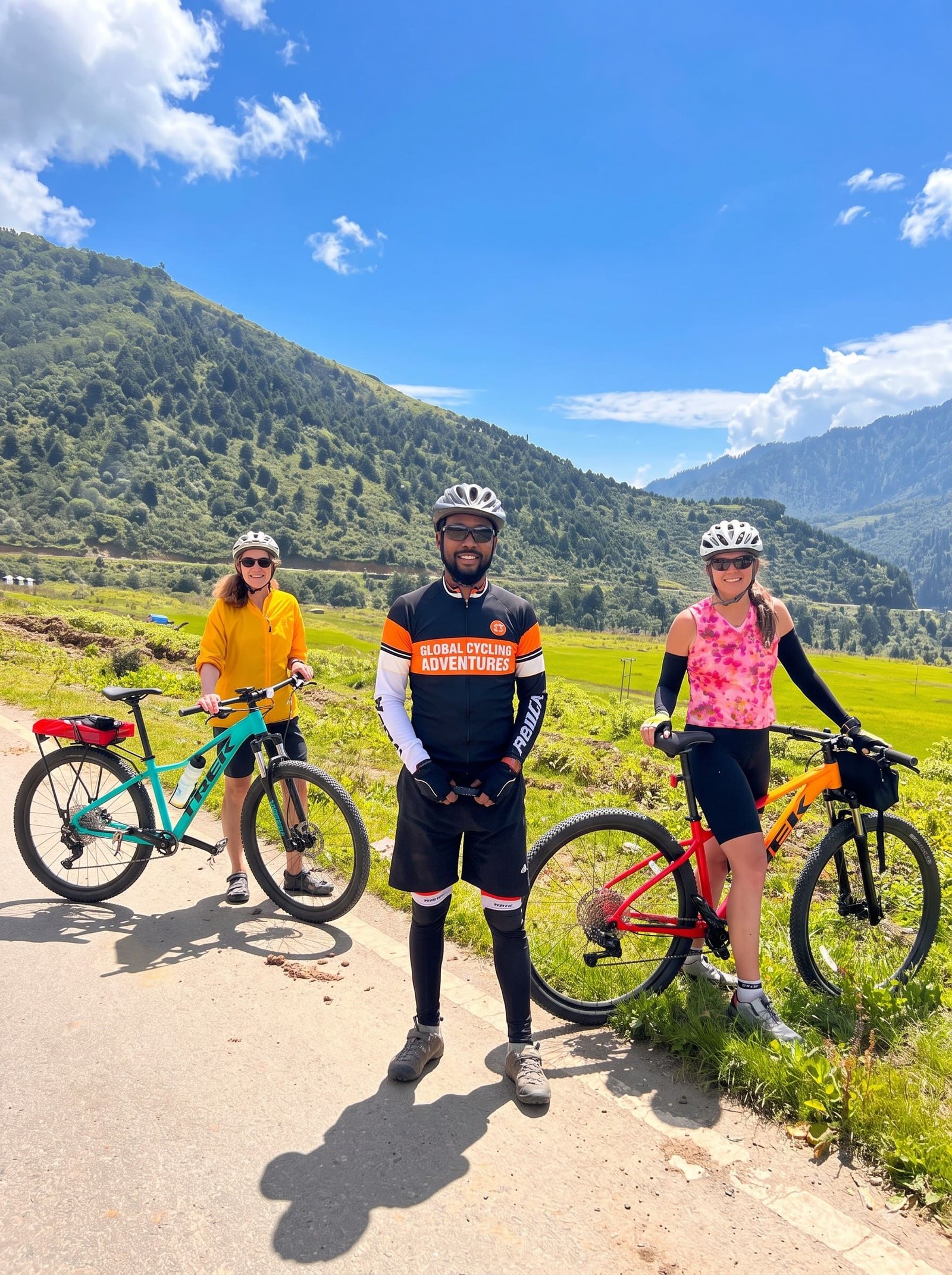
Best Time to Visit Bhutan From the USA
Weather drives most seasonal advice about Bhutan, but for American travelers specifically, timing also has to reckon with how the U.S. calendar lines up — spring break, summer vacation, and the Thanksgiving-through-New-Year stretch all pull demand toward the same windows Bhutan's own peak seasons already favor.
Booking pressure & weather, by season
Higher bar = clearer skies, but also more competition for hotel space and Paro flight seats
If your dates can flex, late May or early September land close to peak-season weather without the fall booking scramble. If you're set on the October–November window — the single most popular stretch among American travelers, partly thanks to Thanksgiving timing — start the conversation with your agency several months out rather than a few weeks before you'd like to fly.
What's Typically Included in a Bhutan Tour Package
Because every visitor to Bhutan (outside the regional exemptions) travels on a government-structured tourism model, core inclusions look broadly similar regardless of which U.S. agency you book through. Where packages genuinely diverge is hotel category, activity add-ons, and how much flexibility is built into the daily schedule.
Inclusions
- Hotel accommodation for every night of the itinerary
- Licensed English-speaking Bhutanese guide for the full trip
- Private vehicle and driver throughout Bhutan
- Visa clearance and in-country permit processing
- Sustainable Development Fee
- Airport pickup and drop-off in Paro
- Full board — breakfast, lunch and dinner
- Bottled water and a local SIM card on arrival
- One included cultural activity, such as an archery demonstration
Exclusions
- International flights to your connecting hub city, and the Paro flight itself
- Travel insurance
- Alcoholic beverages and drinks outside the standard meal plan
- Entrance tickets to a handful of smaller private museums
- Personal shopping and incidentals
- Optional add-ons: trekking gear rental, festival premium seating, hot air ballooning
- Tips and gratuities for your guide and driver
Documents Checklist for U.S. Travelers
The paperwork for American travelers is more involved than it is for Bhutan's regional neighbors, but most of it is handled by your agency once you've supplied the basics.
- Valid U.S. passport: at least six months' validity remaining beyond your planned return date.
- Visa clearance letter: issued by Bhutan's Department of Immigration through your licensed travel agency before departure, then stamped into your passport on arrival.
- Passport-size photographs: a recent set for each traveler on the booking.
- Travel insurance: not always mandatory, but genuinely worth having for a trip this far from home.
- Onward flight confirmation: your connecting and Paro-bound tickets, since airline check-in staff may ask to see the visa clearance letter before boarding the final leg.
Give the connection some breathing room. Because the flight into Paro only operates in daylight and can be weather-dependent, booking a same-day tight connection from the U.S. is one of the more common planning mistakes — build in at least one buffer night at your hub city if your schedule allows it.
The best Bhutan travel agency isn't the one with the flashiest brochure — it's the one that can name their ground operator, hand you a real day-by-day itinerary before you pay, and answer a hard question about the Sustainable Development Fee without hedging.
Practical Tips for American Travelers in Bhutan
Jet lag & the journey itself
Between the transpacific or transatlantic leg and the regional connection into Paro, most U.S. travelers are looking at well over 20 hours of total travel time. Building a rest day into the start of the itinerary, rather than sightseeing on arrival day, makes a real difference.
Currency & cards
The Bhutanese Ngultrum is pegged one-to-one with the Indian Rupee, and cards are accepted at larger hotels in Paro and Thimphu, but cash is still the norm in smaller towns — carry some for tips and incidental purchases.
Mobile connectivity
U.S. carriers generally don't offer native roaming in Bhutan. A local SIM — often arranged as part of your package — or a prepaid eSIM is the more reliable fix for staying online.
Altitude & pace
Paro and Thimphu sit at a moderate altitude that most travelers adjust to without issue, but pairing that with jet lag is a good reason to keep the first evening low-key rather than ambitious.
Tipping culture
Tipping your guide and driver is customary, though not fixed by law — budgeting for it separately, rather than assuming it's baked into the package price, avoids an awkward moment on the last day.
What to pack
Layers beat one heavy jacket — valley towns can be genuinely warm at midday and cold again soon after sunset, even outside the winter months. A broken-in pair of hiking shoes matters more than anything else for the Tiger's Nest hike.
Frequently Asked Questions: Bhutan Travel Agency for U.S. Travelers
Do U.S. citizens need a visa to visit Bhutan?
Yes. Unlike Indian, Bangladeshi and Maldivian nationals, U.S. citizens need a visa to enter Bhutan. It's arranged through a licensed Bhutan travel agency once your itinerary and travel dates are confirmed, with an approval letter issued before departure and the physical stamp applied on arrival.
Can Americans travel to Bhutan independently, without an agency?
No. Bhutan's tourism policy requires all foreign visitors other than Indian, Bangladeshi and Maldivian nationals to book their trip through a licensed Bhutanese tour operator, typically via a partnering travel agency in their home country. Independent, unguided travel isn't an option for U.S. citizens.
How do I get to Bhutan from the United States?
There are no direct flights from the U.S. to Bhutan. Travelers connect through a hub city such as Bangkok, Singapore, Delhi, Kathmandu, Dubai or Doha, then fly the final leg into Paro on Drukair or Bhutan Airlines, the only two carriers serving Bhutan's sole international airport.
What is the Sustainable Development Fee and who pays it?
It's a nightly government fee charged to every international tourist visiting Bhutan, used to fund healthcare, education and environmental programs. Your travel agency typically collects it as part of your total package rather than requiring separate payment at the border, and since the rate is revised periodically, it's worth confirming the current figure in writing.
How many days should I plan for a Bhutan trip from the USA?
Given the long journey to reach Bhutan, most U.S. travelers plan 7 to 9 days on the ground to comfortably cover Paro, Thimphu and Punakha. Extend to 10 to 12 days to add a trek or push further into central Bhutan toward Trongsa and Bumthang.
Is Bhutan safe for American travelers, including solo travelers?
Bhutan is generally considered a low-crime, welcoming destination, and because every foreign visitor travels with a licensed guide and driver, solo American travelers are rarely without support during the day. As with any international trip, standard precautions and travel insurance are still sensible.
What's the best time of year for a U.S. traveler to visit Bhutan?
Spring (March to May) and fall (September to November) offer the clearest mountain views and coincide with major festivals, though they're also the busiest and get booked earliest. Summer is quieter and lush despite the monsoon, and winter brings cold, clear skies with fewer crowds.
How do I choose a reliable Bhutan travel agency?
Confirm the agency works with a properly licensed Bhutanese ground operator, ask for a fully itemized written itinerary before paying anything, look for reviews that specifically mention guide quality and responsiveness, and make sure they'll put your Sustainable Development Fee and permit handling in writing rather than leaving it vague.
Ready to Plan Your Bhutan Trip With a Trusted Travel Agency?
Share your travel dates, departure city, group size and the kind of trip you're picturing, and a travel designer will map a realistic route and itinerary — with a transparent, written quote and no deposit required just to get started.