
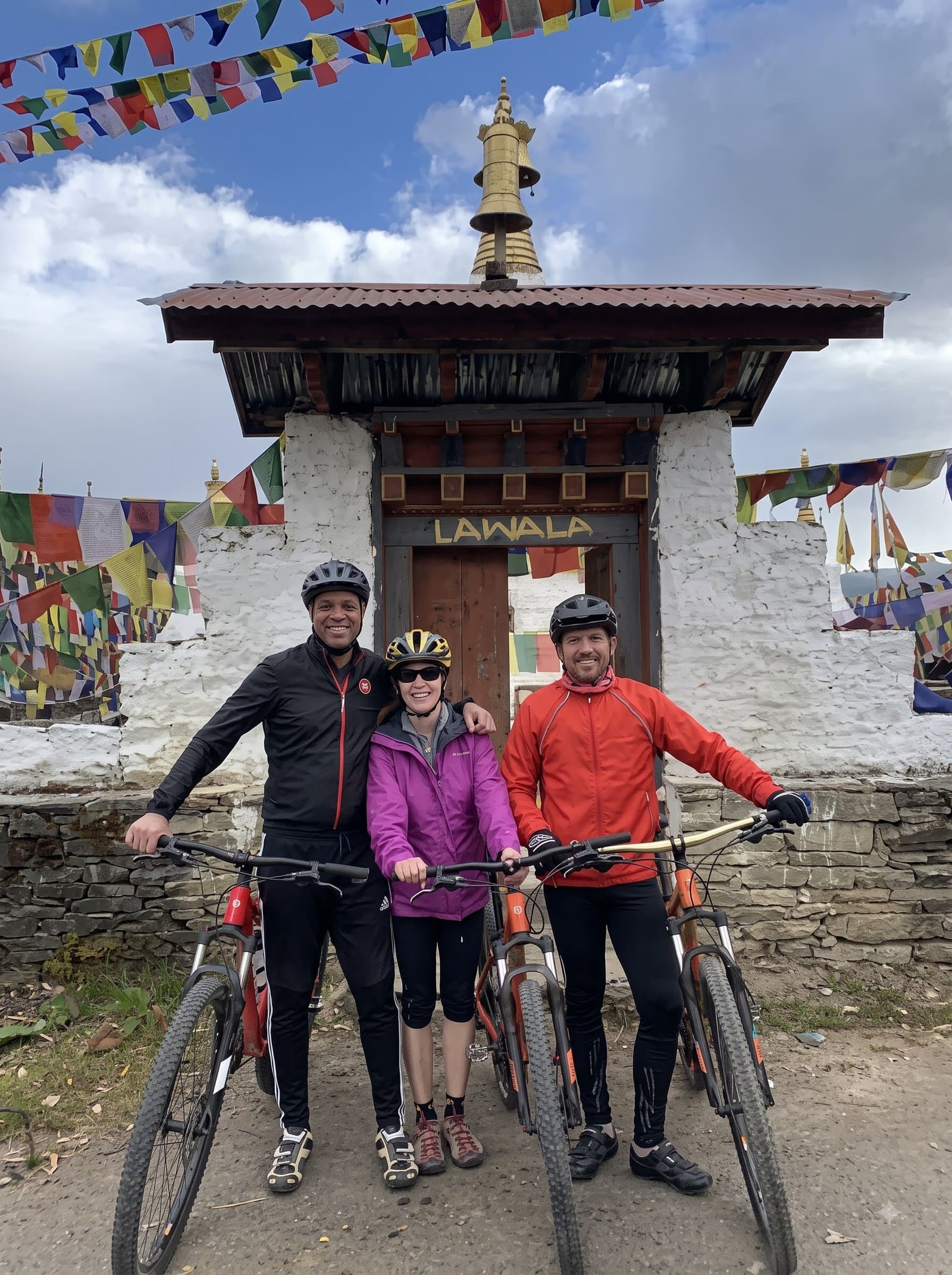
Search for Bhutan tour operators and you'll find hundreds of names, from one-desk agencies in Thimphu to overseas websites that all seem to promise the same trip. What most of those results don't explain is that the operator isn't an optional middleman here — it's the mechanism the country uses to run tourism at all. Every visa application for a non-regional visitor is filed by a licensed Bhutanese operator. Every route permit that gets you past the Thimphu–Paro bubble moves through one. Your guide is assigned by one, your hotels are contracted by one, and the nightly Sustainable Development Fee is collected through one. So the real question isn't whether to book with a Bhutan tour operator; it's which one, and how to tell a sharp one from a mediocre one before you've committed anything. This page walks through the machinery: the licensing system, the work a good operator handles end to end, the comparison points that actually predict how your trip will run, and the signals that should slow you down.
Why Every Visitor Books Through an Operator
Bhutan's tourism policy is built around one deliberate idea: visitors come through licensed local partners rather than through open, self-guided travel. That isn't a sales tactic, and it isn't bureaucracy for its own sake — it's how the country keeps tourism small, guided and accountable. For you, it means four practical things are true from the moment you start planning.
Visa Filing
Only licensed operators can submit a visa application to Bhutan's immigration system. You supply the passport scan, the photo and the dates; the operator files, tracks and confirms clearance. There is no self-service lane for non-regional travelers.
Route Permits
Thimphu and Paro sit inside the standard entry zone, but Punakha, Phobjikha and everywhere east need a route permit. Those permits are requested by your operator, tied to your itinerary, and checked at checkpoints along the road.
Assigned Guides
A licensed, English-speaking Bhutanese guide accompanies every foreign traveler for the length of the trip. Your operator chooses the guide — which is exactly why asking about guide credentials is one of the sharpest questions you can pose.
Ground Logistics
Vehicles, drivers, hotel contracts, checkpoint paperwork, the airport transfer at Paro — the whole on-the-ground apparatus is arranged and paid for through the operator's office, not assembled piece by piece by you.
This is not upselling; it is how the country runs tourism. Independent travel is not an option for non-regional visitors, so the choice was never operator versus no operator. It is which operator. Once that clicks, the comparison stops being about whether you need help and starts being about whose help is worth having — a far more useful question to be asking.
What a Good Operator Handles End to End
Job titles at a good Bhutanese operator overlap, but the work sorts cleanly into a sequence. Watch for it when you talk to one: firms that do all seven of these well are rare, and firms that skip steps usually reveal which ones early.
- Designs the itinerary around your datesNot a brochure reshuffled — your PTO days, flight timings and interests shape the route, the pace and where the extra nights go.
- Files the eVisa and route permitsYour passport bio page, photo and itinerary go through Bhutan's online system, and the permits follow the route you actually drive.
- Books hotels to the right tierFrom clean standard properties to boutique lodges, the operator holds the contracts — and should name the actual hotels in writing.
- Assigns guide and vehicleA licensed guide matched to your interests, a vehicle sized to your group, and a driver who knows the mountain roads.
- Times the Paro flights after clearanceDrukair and Bhutan Airlines release tickets once your visa clearance lands; the operator books the connection that fits your routing.
- Runs the trip day to dayCheckpoints, museum hours, lunch stops, the hot-stone bath booking — someone in an office at home is watching the whole board.
- Answers when weather moves a planA clouded-out Tiger's Nest morning, a delayed flight, a closed pass — the operator rearranges hotels and permits while you finish breakfast.
Notice how much of that list happens before you land and after you've stopped thinking about the trip. The visa and permit work is invisible when it's done well, and the day-to-day running only becomes visible when something slips. That asymmetry is worth remembering: you're not really judging an operator on the itinerary PDF, you're judging them on everything the PDF doesn't show.
Comparing Operators Like a Local
Travelers tend to compare operators on the loudest signals — website polish, response speed, the first itinerary that lands. The comparisons that actually predict how your trip will run are quieter, and all five of them fit in an email thread.
Five comparisons that actually predict your trip
Ask each operator the same questions — the differences show up fast
An operator who answers your first question with a concrete routing and two named hotels tends to answer the on-trip questions the same way. Vague answers early stay vague on the road.
A serious quote names the hotels, the meal plan and the driving time per day. "Comfortable category hotels" is a tier, not an answer — ask for names and look them up.
Licensing is the floor. Languages, specialisms — treks, birds, photography, festivals — and how long they've guided make the difference between a minder and a genuine companion.
Ask what happens when the vehicle breaks down on a mountain road: whose spare comes, from where, and how long it takes. Good operators have an answer without checking.
Ask how they handle a shifted plan — an extra night here, a skipped day there. The best operators explain the adjustments in plain words before they talk figures.
Signals to Slow Down On
Most Bhutanese operators are straightforward professionals running a small business in a small industry. But a handful of bad actors exist in every market, and the distance between your sofa and Thimphu makes it expensive to discover problems late. Four signals are worth treating as yellow lights.
No written quote or itinerary
If a booking can't produce a named-hotel itinerary and a line-item quote in writing, the problem isn't slow email. The problem is that there may be nothing behind the reply.
Pressure to commit early
Deposit-now talk that arrives before documents, hotel names or flight logic are clear is a classic tell. Real operators let the paperwork lead the urgency, not the other way around.
Vague on permits and fees
Ask what the nightly fee covers and what a route permit involves. If the answers stay abstract after two tries, imagine how abstract they'll be from Paro.
No references willing to talk
Any operator with a real track record can produce past travelers who'll answer a message. Silence, or a wall of anonymous reviews, tells you what the reference list would have said.
Fees and rates are government-set, and they move. The Sustainable Development Fee and the one-time visa fee are fixed by Bhutan's government and revised periodically — which is exactly why a serious operator confirms the current numbers in writing without being asked twice. If an operator dodges that request, or quotes a figure "from memory", take the whole conversation back a step.
What Operators Build in Practice
The three itineraries below are the shapes real operator-client relationships tend to take: a short classic circuit to test the water, a long central journey where logistics have to hold over distance, and a two-country build that layers Bhutan onto a Nepal stop. Each is a complete trip. Each is also, honestly, an operator audition.
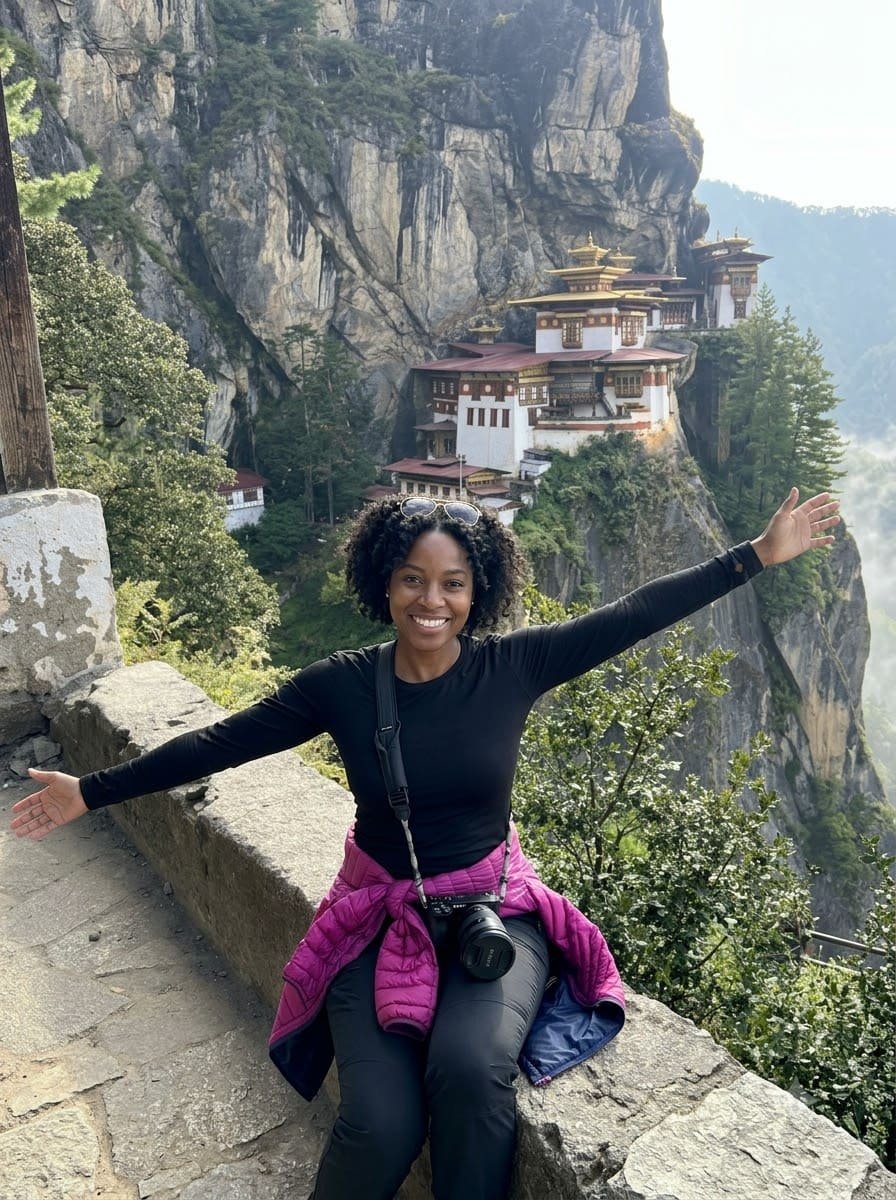
The Operator's Classic
Starter Build7 Days / 6 Nights · Paro · Thimphu · Punakha
Ideal for: testing an operator on the standard route
- The cleanest possible read on how an operator designs, documents and runs a week
- Tiger's Nest hiked early in the trip, while legs and weather both cooperate
- Named hotels in three towns, so you can verify every booking before you pay
- A return night in Paro, since regional flights leave in the morning
Best for: a first collaboration done simply — one route, three towns, nothing exotic to hide behind.
See the day-by-day plan

The Operator's Long Haul
Full Distance13 Days / 12 Nights · Paro · Thimphu · Punakha · Phobjikha · Trongsa · Bumthang
Ideal for: long collaborations and repeat travelers
- Central Bhutan over two high passes, where an operator's logistics either hold or don't
- Phobjikha's glacial valley, with the crane country and Gangtey's ridge-top monastery
- Trongsa Dzong, the old seat of power, seen properly rather than from the road
- Two unhurried nights among Bumthang's temples and orchard country
Best for: watching logistics hold over distance — thirteen days leaves no room to bluff.
See the day-by-day plan
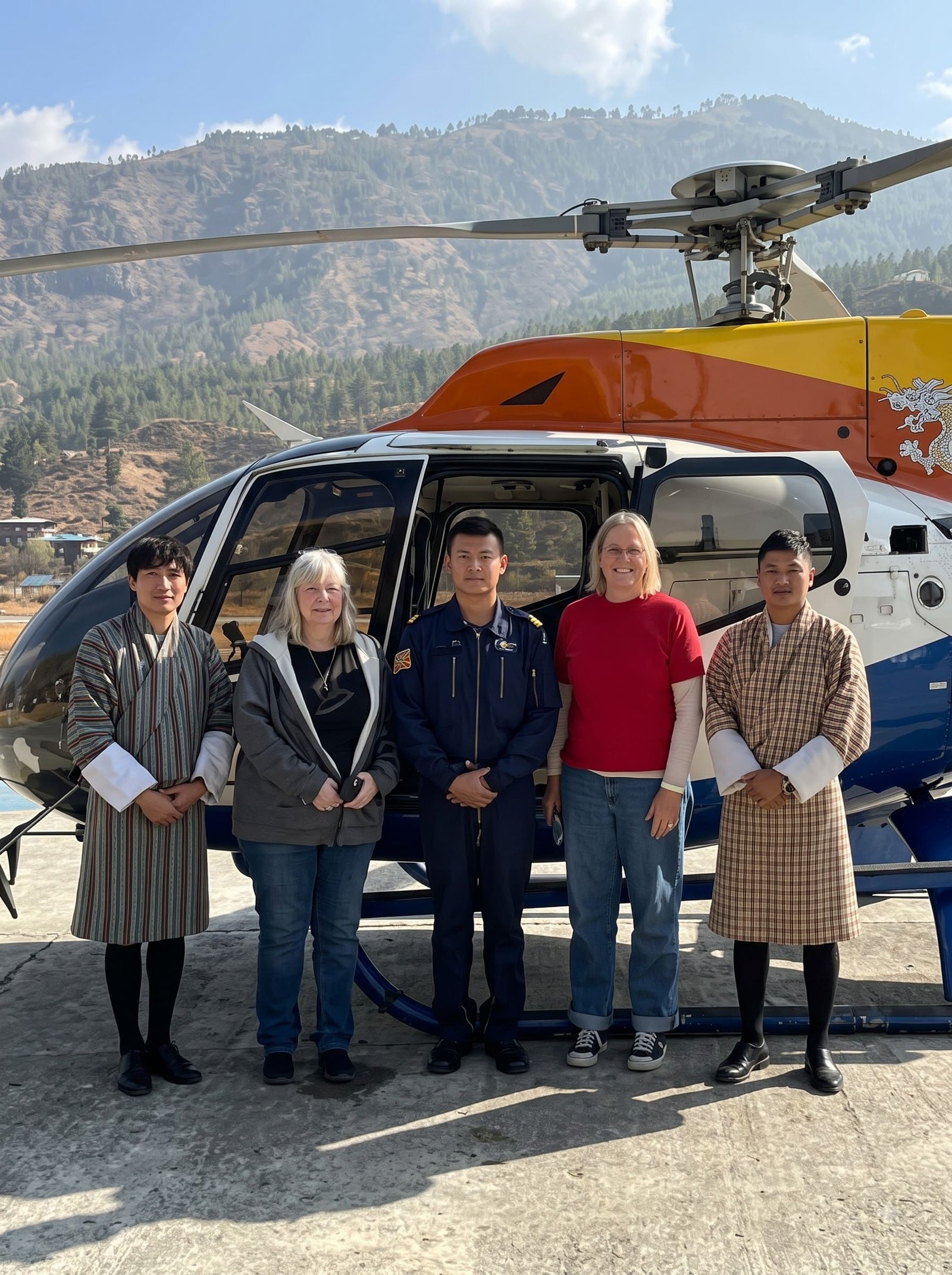
The Stopover Build
Two-Country9 Days / 8 Nights · Kathmandu · Paro · Thimphu · Punakha
Ideal for: multi-country coordination
- Two sets of paperwork, one operator: Nepal entry and Bhutan clearance sequenced correctly
- A full Kathmandu day among the stupas before the short Himalaya hop to Paro
- The mountain flight itself, with the high peaks lined up on a clear morning
- Punakha's dzong and valley in full, without rushing the western circuit
Best for: operators who juggle two countries' logistics and clearly enjoy it.
See the day-by-day plan
Whichever shape you start with, ask the operator to mark where the plan flexes — the weather days, the festival dates, the long driving stretches. The honest ones enjoy the question.
When Operators Get Busy
Bhutan's hotel stock is small and its flight schedule smaller, so operator capacity moves with the calendar in ways that matter to your planning. Festivals, holidays and the clearest-weather months all pile demand onto the same few weeks. The good operators fill first, which is one more reason to choose them before you choose rooms.
Booking pressure through the Bhutanese year
Bar height tracks demand for rooms, guides and Paro flight seats — not weather alone
The practical translation: if your dates land in April or the autumn peak, choose your operator first and let them chase the rooms — that ordering works far better than choosing hotels and asking an operator to fit around them later. In the quieter months the pressure reverses. Good operators have time to design something unusual, and will happily do it.
What an Operator's Package Includes by Default
Because the tourism system sets a baseline, most licensed-operator packages carry a standard inclusion set. Use it as a floor for comparisons. Anything an operator offers below this list isn't cheaper — it's just less.
Inclusions
- Hotel accommodation for every night on the agreed itinerary
- A licensed, English-speaking Bhutanese guide for the whole trip
- Private vehicle with an experienced driver, sized to your group
- Visa clearance processing and route permits for everywhere the itinerary goes
- The nightly Sustainable Development Fee, at the government-set international rate
- Airport pickup and drop at Paro
- All main meals — breakfast, lunch and dinner — across the trip
- Bottled water in the vehicle
- A cultural experience or two — archery on a home ground, a farmhouse hot-stone soak, or a butter-lamp evening
Exclusions
- Your international flights to the regional hub, and any hotel nights there
- The regional flight to and from Paro, unless the quote explicitly says otherwise
- Alcoholic drinks and anything from a hotel minibar
- Travel insurance, including medical evacuation coverage
- Personal shopping, tips, and optional add-ons like festival seating or rafting
- Costs from weather-delayed flights or missed connections, which nobody can guarantee
The Paperwork Your Operator Will Ask You For
A licensed operator handles the filings, but they can only work with what you send. This is the short list, and nearly all of it is digital. Send it clean and the filings move; send it blurry and everything downstream waits.
- US passport bio page: valid at least six months past your return date — scanned clearly, no glare.
- A recent passport photo: plain background, one for each traveler on the booking.
- Confirmed travel dates: the itinerary the visa application will be filed against.
- Travel insurance details: a policy that names medical evacuation, shared before you fly.
- Payment confirmation: the receipt for your package invoice, which carries the fee lines.
- Contact details that work abroad: a phone number and email you actually check while traveling.
On health paperwork specifically: Bhutan's hospitals outside Thimphu are basic, and an evacuation from a remote valley is the one cost nobody budgets for casually. Check that your policy explicitly names medical evacuation — trip cancellation cover alone won't move you off a mountainside — and hand the details to your operator with the rest of your documents.
Choose the operator like you would choose a mountain guide — for judgment, not for brochures.
Six Questions Sharp Travelers Ask Operators
None of these questions is rude, and every good operator will recognize them — most will enjoy them. Ask them all and you'll know more about your candidate firms than most travelers learn before landing.
Who owns the company?
A Bhutanese-licensed operator is the requirement; ownership tells you where decisions are made. Ask how long they've held their license and who signs your itinerary. It's a fair question, and good operators like it.
Which guide gets my trip?
Not "do you have guides" but "who, exactly, and what do they love". A name, a specialty and a couple of sentences about them tells you more than any website paragraph.
What happens on a weather day?
Ask for the last time weather moved a plan and what they did about it. The story you get — concrete, specific, slightly proud — is the best preview of your own trip.
Can I see a real itinerary?
A sample trip with hotel names, driving times and a meal plan shows how they think. A glossy flyer full of adjectives shows how they market.
How do you handle festivals?
Festival dates anchor entire itineraries and fill hotels early. An operator who asks about your dates before quoting is doing the calendar math in the right order.
What's not in the quote?
Exclusions say as much as inclusions. A clear list of what you still arrange — flights, insurance, drinks — signals a firm that would rather over-explain than surprise you.
Frequently Asked Questions: Bhutan Tour Operators
Do I have to use a licensed operator?
Yes, effectively. Every non-regional visitor — Americans included — needs visa clearance that only a licensed Bhutanese operator can file, and a licensed guide accompanies the trip. Independent backpacking isn't an option the way it is in Nepal or India. The system is deliberate: it keeps tourism guided, accountable and small, and it means the operator you choose genuinely shapes the trip you get.
Can I book through an overseas agency?
You can, and plenty of travelers do for convenience. Understand what happens underneath, though: the overseas agency partners with a licensed local operator, who files the visa, holds the permits and runs the ground plan. Ask who the local partner is, and whether you can talk to them directly — the answer tells you how many desks a question crosses mid-trip.
What does licensing actually mean?
A licensed operator is registered with Bhutan's tourism authorities, which lets them file visa applications, obtain route permits and contract guides and hotels for foreign visitors. Licensing is the entry requirement, not a mark of distinction — every legitimate operator has one, and the quality range within the licensed pool is wide. Treat the license as the door, then judge the craft behind it: itinerary design, guide quality and how they communicate.
Can I request a specific guide?
Often, yes — especially if you're a returning traveler or your trip has a focus like trekking or photography. Ask early, in writing, and understand that festivals and peak weeks stretch the roster. A good operator will tell you honestly whether the guide you want is free, and will suggest someone comparable if they're not. Guides are assigned by the operator, so this request goes through them.
How do payments work?
Through written invoices with named line items — the package services, the nightly fee, the visa fee — paid to the operator or their named partner account before departure. Ask for every line spelled out, and confirm the government-set rates in writing since they're revised periodically. If a quote arrives as one opaque number with no breakdown, ask for the itemized version before anything else happens.
What if plans change mid-trip?
Tell your guide, and they'll call the office — that's the chain. Operators move hotels, rework driving days and refile permit dates more often than travelers realize, because mountain weather enforces it. The changes that take real lead time are Paro flight changes and anything touching your visa record. Small route changes are ordinary; your operator's job is absorbing them without handing you the stress.
Do operators handle festival tickets?
Yes — festival access is part of what a licensed operator arranges, and for the big Tshechus at Paro and Thimphu they'll plan seating, timing and the hotel nights around it well in advance. Festival dates follow the Bhutanese lunar calendar and are announced ahead of time, so share your window early. Operators who build trips around festivals ask for that information first, not last.
How do I check an operator's track record?
Three ways that work. Ask for contact details of two recent travelers with similar trips and actually message them. Read how the operator writes — specific hotels, real logistics, named guides — versus how they advertise. And test response quality with a hard question, like a weather-delay scenario; the answer's texture predicts the trip better than any review score.
Ready to Talk to a Bhutan Tour Operator?
Send your dates, group size and the kind of trip you're weighing, and a travel designer will reply with a real itinerary — named hotels, permit logic and a written quote with every fee line spelled out. No deposit is needed to start the conversation.