
Bhutan travel rewards the prepared far more than the ambitious. The country has no ride-hailing apps to rescue a wrong decision, no rental counters at the airport, and no highway shortcuts between valleys — what it has instead is a system: your operator's vehicle and driver, a licensed guide who recalibrates the day around weather and energy, and a small set of practical habits that make the difference between fighting the logistics and riding them. This page covers that system in order — how you actually move around, what the roads are honestly like, how money and cards behave, where connectivity thins out, what the altitude asks of your body, and the everyday details from plug types to laundry that nobody puts on a poster.
How You Actually Move Around
Visitor transport in Bhutan is a system of exactly four moving parts, and three of them come with your tour.
The private SUV and driver
The default for every tour: a dedicated vehicle with its own driver for the whole trip, bags loaded, water stocked. On mountain roads, that driver's judgment is the quiet hero of the itinerary.
Walking the towns
Thimphu, Paro and Punakha's town stretches are compact and walkable, and your guide knows which streets are worth the shoe leather. Evenings especially belong to your own two feet.
Rare internal flights
Domestic hops exist to the east, but tourists rarely need them — the road journey is the point, and the schedules serve locals first. Treat flights as logistics, not shortcuts.
Trek support on foot and hoof
Multi-day treks run on pack animals and a support crew that moves the camp ahead of you. Day hikes need nothing but boots; the support appears when the trail lengthens.
No self-drive, by design. Visitors do not rent cars in Bhutan — the visitor system pairs every touring party with a licensed guide and a vehicle whose driver stays for the whole route. It sounds restrictive until the first switchback; then it reads as the country looking after its guests, and your job shrinks to enjoying the window seat.
The Roads, Honestly
Bhutan's road network is young, dramatic and better than its reputation — provided you know which kind of road you are on. Five types cover the network.
Five kinds of road you will meet
What each stretch is actually like behind the window
The country's smoothest, widest road — a gentle warm-up that underrates how scenic a highway can be with dzongs along the way.
Switchbacks up to Dochula's chortens, then a long descent into subtropical valley air — the classic Bhutan drive, and the one that needs the camera ready.
A side valley road of dwarf bamboo and farmhouses, narrow in places and all the better for it — crane country announces itself by silence.
Gorges, passes and Trongsa appearing across the void — the drive that justifies the whole loop, taken unhurried with stops that earn their time.
Small, orderly and surprisingly tranquil — traffic circles exist, horns are polite, and the evenings stay quiet enough to hear the dogs assessing you.
Money, Cards and Cash
Bhutan's money questions are practical, not exotic. Six steps, in order, cover everything from landing to the last souvenir.
- Know the ngultrumThe local currency is the ngultrum, pegged one-to-one to the Indian Rupee; prices you see locally are simply stated, and the peg keeps conversion math honest.
- Use cards where they workHotels and larger shops in Thimphu and Paro take international cards, though network hiccups happen — treat the card as plan A, never as the whole plan.
- Expect ATMs to thin outCash machines cluster in the towns and disappear in the valleys. Withdraw what you need before leaving Thimphu or Paro, not on the road.
- Exchange at banks or larger hotelsForex desks at banks and bigger hotels handle conversion reliably; airport counters exist but the towns give better access when you need more.
- Carry cash for the small economyRoadside tea, handicraft stalls, village shops and tips all run on notes. Smaller denominations are gold — ask the bank for them deliberately.
- Keep the fee receiptsThe SDF and visa payments generate receipts; file them with your documents. Checkpoints occasionally ask, and hotels sometimes copy them at check-in.
The pattern is simple: plastic for the big towns, paper for everywhere else. A traveler carrying a modest wad of small notes moves through Bhutan's small economy like a local — which is to say, without once holding up a tea line for change.
What we deliberately do not print. Exchange rates and the government-set fees — the nightly Sustainable Development Fee and the one-time visa fee — are revised periodically, so any figure on this page would age badly. Ask your operator to confirm the current numbers in writing for your dates; they will appear as named lines on the invoice, exactly where they belong.
Staying Connected
Connectivity in Bhutan is best described as good where you sleep and quiet where you drive. Four facts set expectations.
Local SIM or eSIM on arrival
Tourist SIMs are easy to buy in the towns and cheaper than roaming; an eSIM can even be set up before departure. Data coverage in the valleys beats hotel wifi most days.
Hotel wifi in the main towns
Thimphu and Paro hotels carry workable wifi — fine for messages and uploads, less so for video calls. Upload your best photo before the drive east, not after.
Patchy valleys, by geography
Between towns the signal dips in and out with the ridgelines. The guide's phone is the dependable channel; your job is to enjoy the silence it enforces.
Offline maps as backup
Download the route before drive days. The roads are signed, but offline maps reassure the back seat and spare the guide twenty how-much-farther questions an hour.
Altitude, Weather and Your Body
Bhutan sits high enough to respect and low enough to enjoy. Five steps keep your body a willing participant in the itinerary.
- Start moderateParo and Thimphu sit at elevations most visitors handle comfortably on arrival; the real climbs come later in the trip, on purpose.
- Climb in stepsValleys rise gradually along the route — west first, passes later. The itinerary's order is a gentle acclimatization plan wearing a sightseeing costume.
- Hydrate beyond habitHigh, dry days spend water faster than beach vacations do. Refill at every stop; the driver keeps the stock for exactly this reason.
- Take the first evening slowlyAn easy dinner and an early night on arrival day do more for the whole trip than any packing hack. Altitude rewards patience with energy.
- Tell your guide earlyHeadache, poor sleep, unusual tiredness — say so at breakfast, not at the pass. Guides reshape days constantly; they can only work with what they hear.
The policy detail that matters. Standard travel insurance often stops at hospital treatment; Bhutan's valleys occasionally need the stronger phrase — medical evacuation from remote areas, named explicitly in the policy. It is not an entry requirement, but it is the difference between an organized response and an improvised one. Share the certificate with your operator before the trip and carry a printed copy.
Trips Built Around These Practicalities
Three trips, three levels of practical ambition — each structured so the logistics above support the days instead of testing them.
Comfort-First Loop
7 Days6 Nights / 7 Days · Paro, Thimphu and Punakha
Works for: a first practical visit with minimal hotel changes
- Three valleys, three hotels, no more
- Short drives that respect jet lag
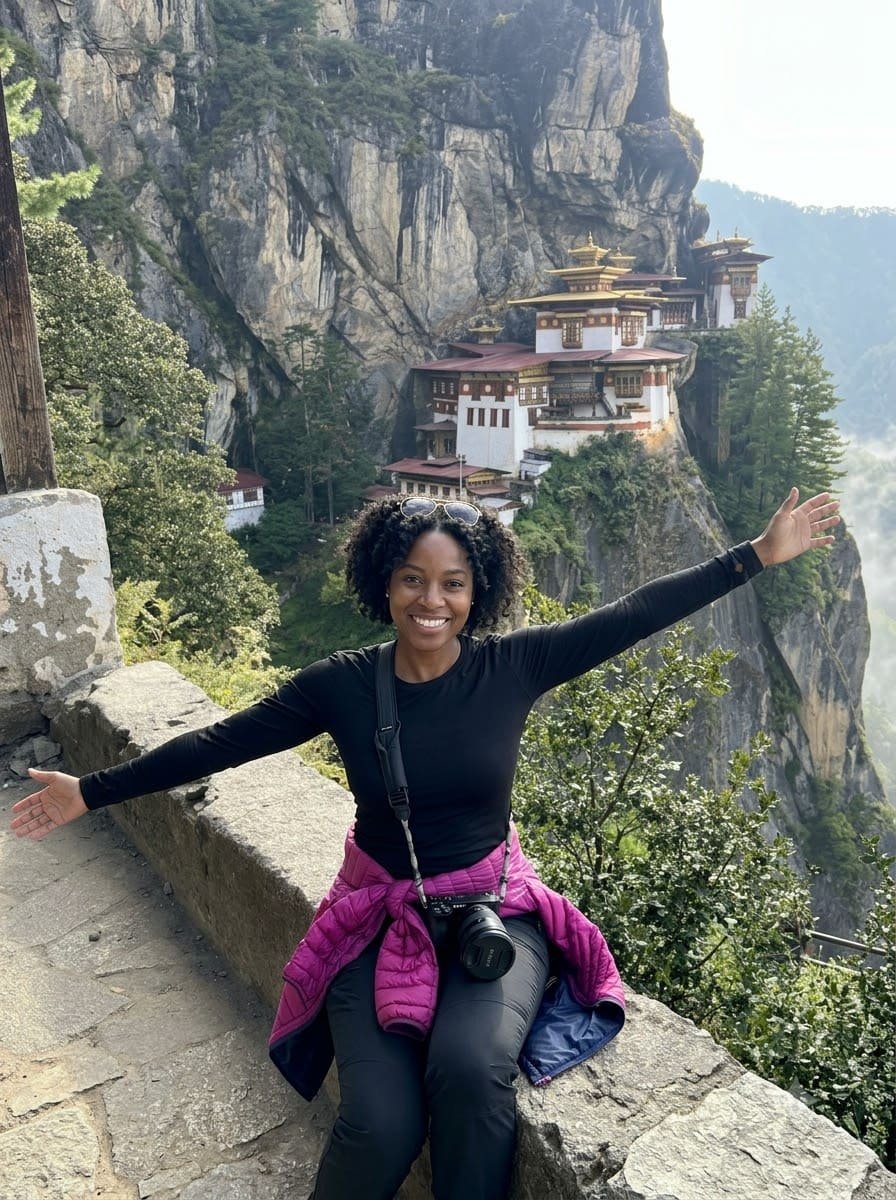
- Tiger's Nest on a rested morning
- Town evenings walkable from the door
Best for: minimal hotel changes and maximum comfort per mile.
See the day-by-day plan

Full Western Sweep
10 Days9 Nights / 10 Days · Paro · Thimphu · Punakha · Phobjikha
Works for: travelers who want room to breathe between drives
- Two nights per valley across the sweep
- A full Phobjikha day on the valley trail
- Drive mornings, town afternoons
- The cash-and-cards rhythm learned by day two
Best for: practical travelers who want the western loop with room to breathe.
See the day-by-day plan
Long-Haul Central
13 Days12 Nights / 13 Days · Paro · Thimphu · Punakha, then Phobjikha · Trongsa · Bumthang
Works for: travelers testing the practicalities across regions
- Every road type in one journey
- Gorge country and Trongsa's dzong
- Two nights in temple-dense Bumthang
- The practicalities, stress-tested properly
Best for: long-haul comfort planning across every kind of ground.
See the day-by-day plan
None of these itineraries assumes heroics — they assume a working vehicle, a steady guide and a pace a human body endorses. Send your dates and comfort priorities, and the loop gets reweighted into a written itinerary where the practicalities are solved before you meet them.
Roads, Passes and Packing, Month by Month
The calendar changes the practicalities more than the sights. The bars track clarity; the notes track what the month asks of your packing and your patience.
The practical year at a glance
Bar height = sky clarity; the notes = what the month does to roads and bags
Two practical takeaways: first, the monsoon months are perfectly visitable if your itinerary keeps its buffers fat and your luggage keeps a rain shell; second, winter rewards small-town travel — clear, quiet and rich in the only currency that matters here, which is attention from a place that is not in a hurry.
Practicalities: What Is Sorted and What Is on You
The practical system splits cleanly down the middle. The operator's side carries the heavy machinery; your side carries the personal kit.
Inclusions
- Accommodation for every night of the route
- Licensed guide accompanying the party throughout
- Private vehicle with dedicated driver
- Full board: breakfast, lunch and dinner
- eVisa filing and Route Permit arrangements
- The nightly Sustainable Development Fee at the government rate
- Paro airport transfers on arrival and departure
- Bottled water stocked through the trip
- All driving logistics, timings and road decisions
Exclusions
- International flights and the Paro airfare
- Travel insurance with evacuation cover
- Personal gear, from boots to batteries
- Alcoholic drinks and personal spending
- Gratuities for guide and driver
- Souvenir spending in towns and stalls
Everyday Documents Worth Carrying
Beyond the visa file, a small daily kit keeps the practical machine running smoothly. Six items, most of them paper.
- Passport: valid six months past your return; the anchor document for everything else.
- eVisa approval copy: printed; the Paro desk and hotel desks alike prefer paper.
- SDF and visa receipts: filed with your documents for occasional checks.
- Route Permit details: needed beyond Paro and Thimphu; your guide carries the original.
- Insurance certificate: printed, with evacuation cover named, shared with the operator.
- Copies of everything: one paper set in your bag, one digital set in the cloud.
Paper beats apps at altitude. Signal fades in the valleys, and the moments that need documents — checkpoints, clinic visits, hotel registrations — rarely coincide with full bars. Print the insurance certificate, the eVisa approval and the fee receipts; the total weighs grams and buys hours if anything ever goes sideways.
The logistics of Bhutan are quieter than the legends — a good vehicle, a steady guide, cash in small notes and mornings that start early.
Small Practicalities, Big Difference
Six details that never make a brochure and quietly make every day better.
Plug types and chargers
Bhutan runs on sockets that accept a couple of common plug shapes; a universal adapter and one long cable cover a week. Bring a power bank for drive days.
Laundry between valleys
Hotels handle laundry overnight in the towns; send it on a two-night stay, not before an early departure. Pack one extra day of everything just in case.
Toilets on the road
Towns have proper facilities; roadside stops are basic. The guide times the comfort stops — trust the schedule and keep tissues in the daypack.
Snacks for drive days
Drive days run long and scenic; a stash of trail food turns a delay into a picnic. Buy them in Thimphu, where the shops are best.
Carry small notes
Small denominations buy tea, fruit and handicrafts without holding up the line. Ask for them at the bank; they are the workhorse of the valleys.
Expect morning frost in winter
Cold months put ice on windshields and in the shade; the driver warms the vehicle, the guide nudges starts slightly later, and the midday sun repays everything.
Frequently Asked Questions: Bhutan Travel Practicalities
Do I need much cash in Bhutan?
More than you expect and less than you fear. The big expenses — hotels, meals, fees — are prepaid or card-friendly, but the small economy runs on notes: tea stops, handicraft stalls, tips. A modest wad of small denominations, topped up in Thimphu, covers a week comfortably.
Do US cards work in Bhutan?
Usually, in hotels and the larger shops of Thimphu and Paro — though networks occasionally hiccup, so never rely on a card as the only plan. Smaller towns and valley stalls want cash, which is why the cash habit above exists.
Is a local SIM easy to get?
Yes — tourist SIMs are sold in the towns with a passport copy, and eSIM options exist for travelers who like to arrive connected. Coverage is strong in the valleys you sleep in and patchy on the roads between them; the guide's phone remains the reliable channel.
Will altitude affect me?
Most visitors feel it as a nudge — a lighter appetite, a shorter breath on stairs — rather than a problem. The itineraries start moderate and climb in steps, guides watch for the early signs, and the habits that help are unglamorous: water, slow first evenings and honesty about headaches.
How are the roads for motion sickness?
Winding — there is no hiding that. The mitigations work, though: sit up front, time the bigger drives for mornings, eat light before departures and tell the guide, who will schedule stops generously. Travelers who manage motion elsewhere manage it here with the same kit.
What plug types and voltage does Bhutan use?
Bhutan uses sockets compatible with several common plug shapes and runs on the same voltage family as Europe. A universal adapter with one long cable covers a week; add a power bank for drive days, when the vehicle's charging points become prime real estate.
Can laundry be done on tour?
Yes, in the towns — hotels on a two-night stay happily turn laundry around overnight. Time it so nothing is in the wash before an early departure, and pack one spare day of clothing as the insurance policy. On longer drives between one-night stops, laundry waits for the next two-night base.
Are shops open on weekends?
Mostly, yes — the weekend market in Thimphu is an attraction in its own right, and town shops keep generous hours. The exceptions are government offices and some smaller establishments; your guide knows which stalls and studios are worth a detour on any given day.
Ready to Handle the Practical Side?
Send us your dates and the practicalities you are least sure about — roads, altitude, money, connectivity. Druk Yul Journeys will answer them plainly, build the trip around the answers and confirm the government-set fees in writing, with no deposit needed to start the conversation.